Financing all Credit Types - 
Financing all Credit Types -
Financing all Credit Types -
Financing all Credit Types -
If your car starts normally but won't move when you put it in Drive or Reverse, the problem is often related to the transmission, CV axle, clutch, brakes, differential, or drivetrain. Identifying the cause quickly can help prevent additional damage and costly repairs.
Low transmission fluid is one of the most common reasons a car starts but will not move when placed in Drive or Reverse. Automatic transmissions rely on fluid pressure to transfer power and engage gears. If the fluid level is too low, the transmission may not build enough pressure to move the vehicle.
Common signs include delayed movement after shifting, slipping gears, a burning smell, transmission fluid leaks, or whining noises. If your car starts but feels like it is not engaging when you shift into gear, the transmission fluid level should be checked before assuming the transmission has failed.
A failed or severely damaged transmission can prevent power from reaching the wheels even though the engine is running normally. This can happen because of internal clutch failure, worn bands, damaged gears, torque converter problems, or long-term fluid neglect.
Signs of transmission failure may include grinding noises, slipping, shaking, delayed engagement, warning lights, or a vehicle that will not move in Drive or Reverse. If the transmission is the issue, the vehicle should be inspected quickly to avoid additional damage.
A broken CV axle can also cause a car to start but not move. The CV axle transfers power from the transmission to the wheels. If it breaks, the engine and transmission may still operate, but the wheels will not receive power.
Common signs include clicking or popping noises when turning, vibration while driving, grease around the axle boot, or a sudden loss of movement after a loud snap or clunk. In some cases, the vehicle may shift into gear but remain completely still because the axle is no longer transferring power.
For manual transmission vehicles, a worn or failed clutch can prevent the car from moving even when the engine starts and the shifter goes into gear. The clutch connects the engine to the transmission. When it wears out, it may slip so badly that power never reaches the wheels.
Signs of clutch failure include high engine RPM with little or no movement, a burning smell, difficulty shifting, a soft or spongy clutch pedal, or the vehicle rolling backward even while in gear. If the clutch is slipping badly, replacement may be needed.
A faulty shift linkage can make it seem like the car is in Drive, Reverse, or another gear when the transmission has not actually engaged. The shifter may move, but the transmission may remain in Park, Neutral, or between gears.
Common signs include a loose or sloppy shifter, gear indicator mismatch, difficulty selecting gears, or the car not responding after shifting. This issue is sometimes less expensive than a transmission failure, but it still requires proper diagnosis.
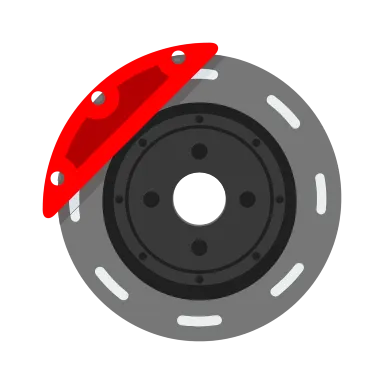
A stuck brake caliper can prevent a vehicle from moving even when the engine and transmission are working properly. If a brake caliper seizes, it can keep pressure on the brake rotor and make the car feel locked in place.
Signs include a burning smell near one wheel, smoke from the brakes, the vehicle pulling to one side, reduced acceleration, or a wheel that feels extremely hot. If the brakes are stuck, the vehicle should not be forced to move because it can cause additional brake and tire damage.
The drivetrain includes components such as the driveshaft, differential, axles, and related parts that transfer power to the wheels. If one of these components fails, the engine may run and the transmission may shift, but the vehicle may still not move.
Signs of drivetrain failure include clunking noises, vibration, grinding sounds, fluid leaks near the differential, or sudden loss of movement. A mechanic should inspect the drivetrain to identify whether the issue is coming from the differential, driveshaft, axle, or another related component.
If your car starts normally but won't move when shifted into Drive, the most common causes include low transmission fluid, transmission failure, a broken CV axle, or a faulty shift linkage. In some cases, the transmission may appear to shift into gear while failing to transfer power to the wheels.
A professional inspection can determine whether the problem originates from the transmission, drivetrain, or another mechanical component.
If your vehicle moves forward but refuses to move in Reverse, the issue may be caused by internal transmission damage, low transmission fluid, shift linkage problems, or electronic transmission faults.
Because reverse gear uses different internal transmission components than forward gears, a vehicle may lose reverse operation while still driving normally in Drive.
The cost depends on the underlying cause. Minor repairs such as adding transmission fluid, adjusting shift linkage, or replacing a damaged CV axle are generally less expensive than major transmission or drivetrain repairs.
A professional diagnosis is often the fastest way to determine the root cause and avoid replacing unnecessary parts.
If your car starts but won't move in Drive or Reverse, prompt diagnosis can help prevent additional damage and costly repairs. Problems involving the transmission, CV axles, drivetrain, brakes, or clutch often become more expensive when ignored.
Our mobile mechanics can come directly to your home, office, or roadside location to diagnose the issue and recommend the appropriate repair without requiring a tow in many situations.
If your car starts but won't move, begin by checking for transmission warning lights, fluid leaks, unusual noises, and signs of drivetrain damage. If the vehicle will not move in Drive or Reverse, avoid forcing it to move, as doing so may cause additional damage. A professional diagnosis can quickly identify whether the issue involves the transmission, CV axle, clutch, brakes, or drivetrain


If your car starts but won't move, the problem is often related to the transmission, CV axle, clutch, drivetrain, or low transmission fluid. Even though the engine is running normally, one of these components may be preventing power from reaching the wheels. A professional diagnosis can identify the exact cause and help prevent additional damage.
A vehicle that won't move in Drive may have low transmission fluid, a failed transmission, a broken CV axle, or shift linkage problems. In some cases, the transmission may appear to engage but fail to transfer power to the wheels. Prompt diagnosis can help determine whether the issue is minor or requires major repairs.
Loss of reverse gear is commonly caused by internal transmission damage, low transmission fluid, or shift linkage problems. Because reverse uses different internal transmission components than forward gears, a vehicle may still move normally in Drive while losing Reverse. A mechanic can inspect the transmission and determine the underlying cause.
Yes. Automatic transmissions rely on transmission fluid to create hydraulic pressure and engage gears. If the fluid level becomes too low, the transmission may slip, hesitate, or fail to move the vehicle altogether. Checking for leaks and maintaining proper fluid levels can help prevent transmission damage.
Yes. A broken or severely damaged CV axle can prevent power from reaching the wheels even though the engine and transmission are functioning normally. Common signs include clicking noises while turning, vibrations, and sudden loss of movement. If the axle fails completely, the vehicle may not move at all.
Yes. Internal transmission failure is one of the most common reasons a vehicle starts but refuses to move in Drive or Reverse. Worn clutches, damaged gears, torque converter issues, or low fluid pressure can all prevent power from reaching the wheels. Transmission problems often worsen over time if left unaddressed.
Yes. A seized brake caliper or other brake system failure can keep a wheel locked and make the vehicle difficult or impossible to move. Drivers may notice a burning smell, excessive heat near a wheel, or the vehicle pulling to one side. Brake issues should be repaired quickly to prevent further damage.
The cost depends entirely on the root cause of the problem. Minor issues such as low transmission fluid or shift linkage adjustments are generally less expensive than major transmission, clutch, or drivetrain repairs. A proper diagnosis is usually the fastest way to determine repair costs accurately.
No. Continuing to drive a vehicle with transmission, drivetrain, brake, or axle problems can lead to additional damage and create safety risks. If the vehicle is not moving correctly, it should be inspected as soon as possible. Ignoring the issue may result in more expensive repairs later.
Yes. Mobile mechanics can inspect the transmission, drivetrain, brakes, CV axles, clutch system, and related components at your location. This can often save you the inconvenience and expense of towing the vehicle to a repair shop. Once the cause is identified, the mechanic can recommend the appropriate repair.
Get a real Car wont drive diagnosis service from a mobile mechanic near you, no workshop visit needed.
No commitment • See pricing instantly

Got his work done quickly and efficiently even though we had some hiccups he stuck through it till the end. Great mechanic great man.


Great service, everything was fine, they were nice and polite, will be using them for all my car needs

The experience is well received mechanic was on time and waited for me and stayed until the fljob is completer

Great service! I would definitely use them again if I ever find I need a dead battery replaced with no way to get to a shop except having it towed in. Love that they come directly to your house!

The mechanics were out promptly and completed the service efficiently! The entire experience was easy to manage.

Reggie was outstanding, quick, and personable. I’ll be sure to Instantaneous Car Fix the next time I’m stuck on the road.

Came out snd fixed my parents car today. Very nice young man my dad said. He did a good job. Thank you.

Excelent he was very professional and polite my car was running again within 10 minutes after he arrives

Sergio was fantastic! He was very informative and explained everything to us during the diagnostic. Thank you, Sergio!

Got his work done quickly and efficiently even though we had some hiccups he stuck through it till the end. Great mechanic great man.
Great service, everything was fine, they were nice and polite, will be using them for all my car needs
The experience is well received mechanic was on time and waited for me and stayed until the fljob is completer
Great service! I would definitely use them again if I ever find I need a dead battery replaced with no way to get to a shop except having it towed in. Love that they come directly to your house!
The mechanics were out promptly and completed the service efficiently! The entire experience was easy to manage.
Reggie was outstanding, quick, and personable. I’ll be sure to Instantaneous Car Fix the next time I’m stuck on the road.
Came out snd fixed my parents car today. Very nice young man my dad said. He did a good job. Thank you.
Excelent he was very professional and polite my car was running again within 10 minutes after he arrives
Sergio was fantastic! He was very informative and explained everything to us during the diagnostic. Thank you, Sergio!