Financing all Credit Types - 
Financing all Credit Types -
Financing all Credit Types -
Financing all Credit Types -
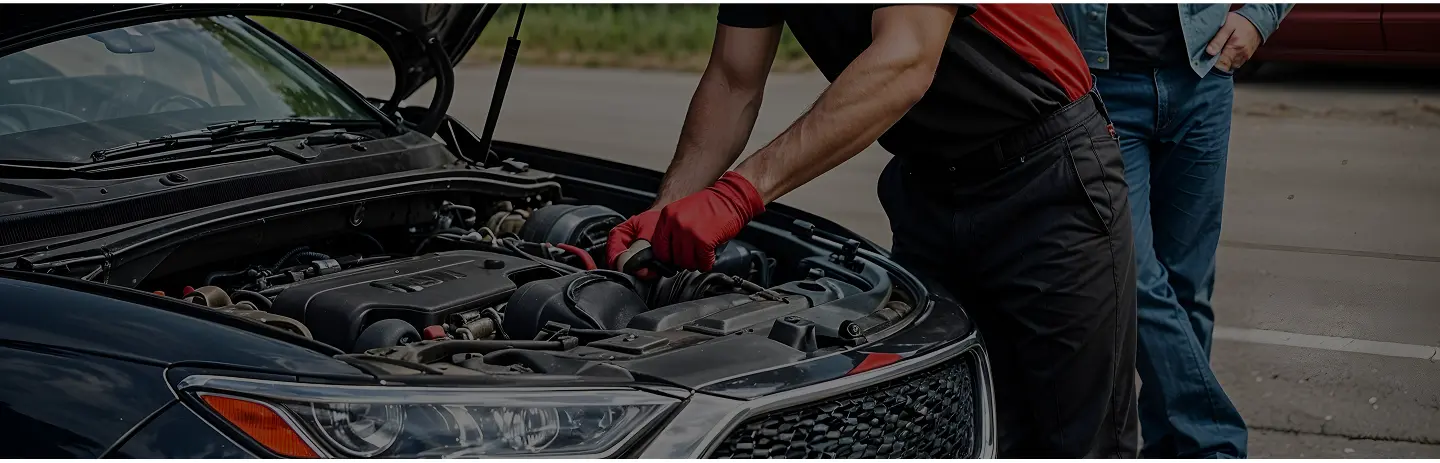
You’re cruising down the highway at 70 MPH when suddenly the steering wheel starts shaking.
Maybe the vibration starts lightly at first. Then it becomes impossible to ignore. The faster you drive, the worse it feels. Sometimes the entire car vibrates. Sometimes it’s only the steering wheel. Other times you feel it mostly through the seat or floorboard.
Most drivers immediately assume something serious is wrong.
And honestly, sometimes they’re right.
A car vibrating at highway speeds can be caused by something minor like tire imbalance or something much more dangerous like a failing wheel bearing, damaged suspension component, warped brake rotor, bad CV axle, or driveline problem.
The good news is that the vibration pattern itself usually tells you where the problem is developing.
At Instant Car Fix, our mobile mechanics diagnose highway-speed vibrations constantly. In many cases, drivers are surprised to learn the issue isn’t the engine or transmission at all. Often the problem comes down to tires, wheels, suspension, or worn driveline components that only become noticeable at higher speeds.
This guide explains:
♦ why your car vibrates at highway speeds
♦ how to tell which component is likely causing it
♦ when the vibration becomes dangerous
♦ common repair costs
♦ and what symptoms point toward tires, brakes, suspension, or drivetrain problems
If your car vibrates at highway speeds, the most common causes include unbalanced tires, bent wheels, worn suspension parts, bad wheel bearings, warped brake rotors, damaged CV axles, driveline imbalance, uneven tire wear, or alignment problems.
The location and timing of the vibration usually provide major diagnostic clues.
If the steering wheel shakes, the problem is often in the front tires, front suspension, or wheel bearings. If the vibration is felt more through the seat or floor, the rear wheels, driveline, or rear suspension become more likely.
Most vibration issues become noticeable between 55-80 MPH because rotational forces increase dramatically as speed rises.
A slightly unbalanced tire that feels perfectly normal at city speeds may begin shaking aggressively once highway speeds amplify the imbalance. Small imperfections in tires, wheels, bearings, axles, or suspension components become much more noticeable once rotational speed increases.
This is why many drivers say:
“The car feels completely normal until I hit about 65 MPH.”
That speed-dependent pattern is one of the biggest clues mechanics use during diagnosis.
This is the single most common cause of highway-speed vibration.
Tires and wheels must be balanced so weight is evenly distributed while rotating. If balance weights fall off or tire wear becomes uneven, the wheel begins wobbling slightly at high speed.
Drivers often notice the steering wheel beginning to shake around 55-65 MPH, with the vibration becoming progressively worse as speed increases before smoothing out once they slow down again.
Even small tire imbalances can create surprisingly aggressive shaking at highway speed.
Usually $80-$200 for balancing and inspection.
Potholes are brutal on wheels.
A wheel that becomes slightly bent may still hold air and appear normal visually, but once highway speed increases, the wheel no longer rotates evenly.
This creates vibration that often feels extremely similar to tire imbalance.
Many drivers first notice the issue after hitting a pothole, curb, or road debris. The steering wheel may shake continuously at certain speeds while remaining relatively smooth at others.
Wheel repair or replacement usually costs $150-$600.
Uneven tire wear creates inconsistent road contact.
As tires develop flat spots, cupping, feathering, or scalloped tread wear, they begin creating rhythmic vibration while rotating at highway speed.
This often happens because of poor alignment, worn shocks, failing suspension components, or neglected tire rotations.
Many drivers replace suspension parts only to later discover the damaged tires themselves continue causing vibration.
Common signs include humming noise, vibration increasing with speed, uneven tread patterns, and shaking that doesn’t fully disappear after balancing.
New tires may cost $500-$1,500 depending on the vehicle.
Wheel bearings allow the wheels to rotate smoothly while supporting the vehicle’s weight.
As wheel bearings wear out, they begin producing vibration and humming noises that become more aggressive with speed.
Drivers often describe it as:
“a roaring or growling noise that gets louder on the highway.”
Unlike tire imbalance, wheel bearing vibration is usually accompanied by noticeable sound changes.
A failing wheel bearing becomes especially dangerous because severe failure can eventually allow excessive wheel movement or even wheel separation.
Drivers may notice humming noise, steering looseness, vibration increasing with speed, or sound changes while turning.
Usually $300-$800 per wheel.
Many drivers assume warped brake rotors only cause vibration during braking.
But severely warped rotors can sometimes create noticeable vibration even while cruising at highway speed.
This becomes more obvious after heavy braking, towing, mountain driving, or repeated overheating of the brake system.
If the vibration becomes dramatically worse while braking, the brake system should be inspected immediately.
Read:
Why are my brakes squeaking/
And:
Car shaking when braking diagnosis
Usually $250-$700.
Worn suspension components often reveal themselves at highway speeds.
Bad control arms, worn ball joints, failing tie rods, damaged bushings, and worn shocks can all create instability and vibration once the suspension is loaded at higher speeds.
Drivers often notice loose steering feel, instability over bumps, wandering steering, or vibration worsening on rough roads.
Suspension problems are especially dangerous because they directly affect vehicle control and braking stability.
Usually $200-$1,500 depending on the failed component.
Poor alignment usually causes pulling to one side, uneven tire wear, unstable steering, or an off-center steering wheel.
But severe alignment problems can also create highway vibration once tire wear becomes uneven enough.
Many drivers first notice the issue after hitting potholes, curbs, or road debris.
Read:
Car pulling to one side diagnosis
Usually $120-$250.
CV axles transfer power from the transmission to the wheels.
When inner CV joints begin wearing out, they can create vibration during acceleration that becomes much more noticeable at highway speeds.
This is one of the most commonly misdiagnosed causes of highway vibration because it often feels similar to tire imbalance.
A major clue is vibration during acceleration that improves when letting off the throttle.
Drivers may also notice clicking during turns, shaking uphill, or grease leaking near axle boots.
Usually $300-$900.
On rear-wheel-drive, AWD, and 4WD vehicles, the driveshaft itself can become imbalanced.
A damaged driveshaft, worn U-joint, or driveline imbalance creates vibration that often feels like the entire vehicle is shaking from underneath.
Drivers usually describe the vibration as deeper and heavier than normal tire-related shaking, especially during acceleration or at specific highway speeds.
This type of vibration is commonly felt through the floorboard or seat rather than the steering wheel.
Usually $400-$1,500.
Worn mounts allow excessive drivetrain movement under load.
At highway speeds, this can create vibration that feels like it’s coming from the tires or suspension even though the issue is actually engine movement transferring into the chassis.
Drivers often notice vibration during acceleration, clunking during shifting, rough idle, or shaking during throttle changes.
Read:
Why you car jerks when shifting gears
Usually $250-$800.
If the vibration is mostly felt through the steering wheel, the issue is usually located somewhere in the front of the vehicle.
The most common causes include front tire imbalance, bent wheels, worn tie rods, bad front wheel bearings, suspension wear, or brake rotor problems.
Front-end vibration almost always transfers directly into the steering system because the steering wheel connects directly to the front wheels.
Read:
Steering wheel shaking diagnosis
If the vibration is mostly felt through the seat, floorboard, or center console, the rear of the vehicle or driveline becomes more likely.
This often points toward rear tire imbalance, rear wheel issues, driveshaft problems, rear suspension wear, or axle imbalance.
Drivers frequently describe this as:
“the whole car vibrating underneath me.”
That description is extremely useful diagnostically.
A vibration that appears mainly during acceleration often points toward CV axle wear, drivetrain imbalance, engine mount failure, transmission mount issues, or driveline problems.
This type of vibration usually changes depending on throttle input rather than road speed alone.
That distinction matters a lot during diagnosis.
Read:
Car hesitates when accelerating diagnosis
And:
Car jerks while driving diagnosis
Potholes commonly damage wheels, tires, suspension components, and alignment settings.
Many drivers hit a pothole and notice vibration immediately afterward. Even if the tire doesn’t go flat, internal tire damage or wheel bending may already have occurred.
The vibration may not appear until highway speed amplifies the damage.
Some vibrations are minor.
Others become genuinely dangerous.
A bad wheel bearing, damaged suspension component, separated tire belt, or failing driveline part can eventually lead to tire blowouts, steering instability, loss of vehicle control, wheel separation, or driveline failure.
If the vibration suddenly becomes worse, the steering feels unstable, or unusual noises appear alongside the shaking, the vehicle should be inspected immediately.
One customer called us after replacing tires twice trying to solve a vibration at 70 MPH on a BMW. Tire balancing barely improved it. Our mechanic discovered a bent wheel hidden on the inner barrel where it wasn’t easily visible. Replacing the wheel eliminated the vibration completely.
Another driver with a Chevy Silverado described the truck as “shaking like crazy” on the freeway after hitting a pothole. Inspection revealed a damaged tire belt causing severe imbalance that balancing alone could never fix.
We also diagnosed a Honda Accord that vibrated only during acceleration uphill. The issue turned out to be a failing inner CV axle something several shops had initially mistaken for tire imbalance.
Proper diagnosis usually involves:
♦ road testing
♦ tire inspection
♦ wheel balancing checks
♦ suspension inspection
♦ wheel bearing testing
♦ alignment inspection
♦ driveline testing
At Instant Car Fix, our mobile mechanics diagnose vibration problems directly at your location.
Many highway vibration complaints actually involve multiple smaller issues happening simultaneously like worn tires combined with suspension wear or alignment problems.
That’s why proper diagnosis matters before replacing random parts.
If your car vibrates at highway speeds, the issue could involve:
♦ tire imbalance
♦ bent wheels
♦ bad wheel bearings
♦ suspension wear
♦ brake problems
♦ CV axle failure
♦ driveline imbalance
♦ alignment issues
At Instant Car Fix, our mobile mechanics diagnose:
♦ steering wheel vibration
♦ highway shaking
♦ driveline vibration
♦ suspension problems
♦ wheel bearing issues
♦ tire-related vibration
directly at your location.
We perform:
♦ drivability inspections
♦ suspension diagnostics
♦ vibration testing
♦ wheel and tire inspections
♦ steering inspections
♦ highway-speed diagnostics
without requiring a tow truck or repair shop visit.
If you're searching for a mechanic near me because your car vibrates at highway speeds, Instant Car Fix can help identify the real problem before it becomes unsafe or significantly more expensive.


The most common causes are tire imbalance, uneven tire wear, bent wheels, bad wheel bearings, or suspension problems. The faster the vehicle moves, the more these small imperfections become amplified.
Steering wheel vibration at highway speed usually points toward front tire imbalance, bent wheels, worn suspension components, or brake rotor issues. Front-end problems transfer vibration directly into the steering system.
Absolutely. Uneven tread wear, internal tire damage, separated belts, or imbalance can all create vibration that becomes much worse at highway speeds.
Minor vibration may not immediately cause failure, but it should never be ignored. Some causes like wheel bearing failure or tire damage can become dangerous quickly.
Alignment itself usually causes pulling or uneven tire wear first. But severe misalignment can eventually create vibration by damaging the tires unevenly over time.
Acceleration-related vibration often points toward CV axles, drivetrain imbalance, engine mounts, or transmission mounts. Tire imbalance usually vibrates consistently regardless of throttle input.
A bad wheel bearing commonly causes humming, growling, vibration, and noise that worsens with speed. The sound may also change while turning.
Potholes frequently bend wheels, damage tires internally, knock alignment out of spec, or damage suspension parts. The vibration often becomes most noticeable at highway speed afterward.
Yes. Warped brake rotors commonly create vibration during braking, but severe rotor warping can sometimes cause noticeable vibration even while cruising.
Vibration felt through the seat or floor often points toward rear wheels, driveline imbalance, driveshaft problems, or rear suspension issues rather than front-end steering components.
If your car vibrates at highway speeds, the issue could involve tires, wheels, suspension components, wheel bearings, driveline problems, or alignment issues. InstantCarFix mobile mechanics diagnose highway-speed vibration problems directly at your location before they become dangerous or cause expensive damage.

Had Caleb do a pre-purchase inspection on a Jeep I was buying from Missouri, and the guy was great. Really thorough — found stuff I would’ve missed, told me straight what was worth fixing and what wasn’t. No runaround, answered all my questions fast. If you’re buying a used rig, don’t skip this step. I highly recommend.


Jamie arrived on time, diagnosed my car’s issue and provided a quote for the repair. I will definitely use again if needed.

My Jaguar battery was dead and I had no way of accessing it since it is located in the trunk….and I could not open the trunk since the battery was dead😵💫. Contacted Instant Car Fix and a mechanic was dispatched with a new battery. He was great! Got the trunk opened by jumping a terminal under the hood. Installed the new battery and the car was good to go! Great service by an experienced mechanic! Thanks!

Diego has great customer service. He was very fast and professional. He also gave me a few tips for any other problems

Lovely service, very fast, the car was fully fixed, battery change was super fast and oil change. Very grateful!

Great customer service! Real person answered every phone call right away and was able to assist quickly. I got the pre-purchase inspection I needed. Detailed notes, multiple photos. Very satisfied. A+

Zach was great is work with. Showed up in the expected time frame, got the work done quickly as well.

J e a n was very helpful to me I'm hoping my problem has been resolved very patient and very professional I recommend them to other people

Zack was very professional and did a great job fixing my car during the estimated time he provided. We would definitely use this service again.

Had Caleb do a pre-purchase inspection on a Jeep I was buying from Missouri, and the guy was great. Really thorough — found stuff I would’ve missed, told me straight what was worth fixing and what wasn’t. No runaround, answered all my questions fast. If you’re buying a used rig, don’t skip this step. I highly recommend.
Jamie arrived on time, diagnosed my car’s issue and provided a quote for the repair. I will definitely use again if needed.
My Jaguar battery was dead and I had no way of accessing it since it is located in the trunk….and I could not open the trunk since the battery was dead😵💫. Contacted Instant Car Fix and a mechanic was dispatched with a new battery. He was great! Got the trunk opened by jumping a terminal under the hood. Installed the new battery and the car was good to go! Great service by an experienced mechanic! Thanks!
Diego has great customer service. He was very fast and professional. He also gave me a few tips for any other problems
Lovely service, very fast, the car was fully fixed, battery change was super fast and oil change. Very grateful!
Great customer service! Real person answered every phone call right away and was able to assist quickly. I got the pre-purchase inspection I needed. Detailed notes, multiple photos. Very satisfied. A+
Zach was great is work with. Showed up in the expected time frame, got the work done quickly as well.
J e a n was very helpful to me I'm hoping my problem has been resolved very patient and very professional I recommend them to other people
Zack was very professional and did a great job fixing my car during the estimated time he provided. We would definitely use this service again.