Financing all Credit Types - 
Financing all Credit Types -
Financing all Credit Types -
Financing all Credit Types -
Most people hear about brake pads all the time. Brake shoes? Not so much.
That’s because brake shoes sit inside drum brakes, usually on the rear wheels. You don’t see them, you don’t hear about them, and since they last longer, they tend to get ignored.
Until something starts to feel off.
And when they wear out, it’s rarely sudden. It just slowly affects how your car stops which is why a lot of drivers don’t catch it right away.
Both brake shoes and brake pads are designed to slow your car down, but they work in completely different ways.
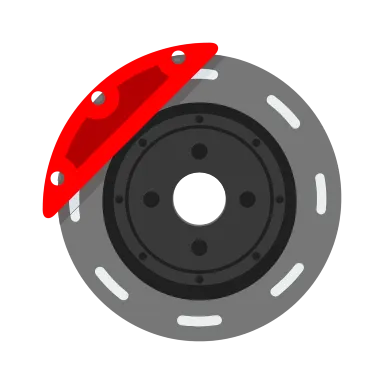
Brake pads press inward against a rotor.
Brake shoes push outward inside a drum.
That’s really the easiest way to understand it:
pads squeeze
shoes expand
Once you picture that, everything else falls into place.
Yes, more than most people realize.
A lot of vehicles still use:
disc brakes (pads) in the front
drum brakes (shoes) in the rear
Even on newer cars, brake shoes are often used for the parking brake system.
Brake shoes create friction inside the drum, which slows the wheel down.
They also help:
hold the car in place when parked
support the parking brake
So if your parking brake isn’t working properly, worn brake shoes are often part of the reason.
There’s no exact number, but most brake shoes last:
60,000 to 100,000 miles
That said, they don’t just fail overnight. They wear down gradually.
You’ll usually start noticing:
weaker braking
longer stopping distance
parking brake slipping
unusual noises from the rear
This is what most people want to know.
Typical cost:
$200 to $500 per axle
Since brake shoes are usually in the rear:
$250 to $500 is common
For parking brake shoes:
$150 to $400
A few things can change the price:
labor time (drum brakes take longer)
condition of the brake drum
whether hardware needs replacement
your location
A lot of people assume this is similar to replacing brake pads.
It’s not.
There are more parts involved, and everything has to go back exactly the way it came apart.
Lift the vehicle safely, remove the wheel, and take off the brake drum.
Sometimes it comes off easily. Sometimes it takes a bit of effort.
Before removing anything, take a photo.
There are springs and clips that can be tricky to remember later.
Carefully remove:
return springs
hold-down clips
adjuster
This is usually the most time-consuming part.
Once everything is disconnected, the shoes come out.
Check nearby components while you’re there:
wheel cylinder
hardware condition
Install the new shoes in the same position.
Then reinstall the hardware and springs.
This part matters more than people think.
too loose → weak braking
too tight → dragging
You want slight contact with the drum.
Put the drum back on, reinstall the wheel, and lower the car.
Pump the brake pedal and test at low speed before driving normally.
This isn’t the hardest repair but it’s easy to mess up if you rush it.
Most issues come from:
incorrect spring placement
poor adjustment
Take your time here.
You can but it’s not a good idea long-term.
Worn brake shoes can:
reduce braking performance
affect the parking brake
damage the drum
If you’re hearing grinding, it’s already overdue.
Most people describe it as:
braking feels weaker
the car takes longer to stop
parking brake doesn’t hold well
It’s subtle at first then becomes obvious.
Common sounds include:
squeaking
scraping
grinding (worst case)
Grinding usually means metal is contacting the drum.
A customer noticed the car rolling slightly when parked.
The issue turned out to be worn brake shoes. After replacement and adjustment, the parking brake worked normally again.
Driver called us and complained about a grinding sound.
The brake shoes were completely worn down, causing metal-on-metal contact.
Repair required:
new brake shoes
drum resurfacing
Customer said braking didn’t feel as strong as before.
Rear brake shoes were worn, reducing braking balance.
After replacement, stopping performance improved immediately.
The car pulled slightly when braking.
Cause:
uneven brake shoe wear
Fixing the issue restored proper balance.
A lot of drivers replace front brake pads regularly…
…but never touch the rear brake shoes.
That imbalance can reduce overall braking performance more than people expect.
Usually $200 to $500 per axle
Short term, yes but it reduces braking performance.
Typically 60,000 to 100,000 miles
Look for:
weak braking
noise
parking brake issues
About 1.5 to 3 hours
Yes, directly.
front pads: $150–$300
rear shoes: $200–$400
pads: 30,000 to 70,000 miles
shoes: 60,000 to 100,000 miles
Not necessarily. Independent shops are often more affordable and provide the same quality work. Similarly, mobile mechanics can actually come to you and save you time and money!
If you’re not sure whether your brake shoes need replacing, you’re not alone. Most drivers don’t even think about them until something feels off.
That’s where Instant Car Fix comes in.
Instead of guessing or replacing parts unnecessarily, you can get a clear answer on what’s actually going on with your brakes.
With Instant Car Fix, you can:
connect with a professional who understands brake systems
get help diagnosing symptoms like weak braking or rear noise
find out if it’s brake shoes, brake pads, or something else entirely
avoid paying for repairs you don’t actually need
A lot of brake issues feel similar from the driver’s seat. What seems like worn brake shoes could be something completely different or vice versa.
Getting it checked early can:
prevent bigger repair costs
improve safety
give you peace of mind before things get worse
If your braking doesn’t feel quite right or your parking brake isn’t holding like it should, it’s worth getting a second opinion before it turns into a bigger problem.
Brake shoes don’t get much attention, but they play an important role in how your car stops.
Because they last longer and stay hidden, they’re easy to overlook. But once they wear out, the difference is noticeable.
If your braking feels even slightly off or your parking brake isn’t holding like it used to, it’s worth getting them checked.
Get a real Brake Shoes (Rear) service from a mobile mechanic near you, no workshop visit needed.
No commitment • See pricing instantly

Great service, everything was fine, they were nice and polite, will be using them for all my car needs


Excelent he was very professional and polite my car was running again within 10 minutes after he arrives

Got his work done quickly and efficiently even though we had some hiccups he stuck through it till the end. Great mechanic great man.

Great service! I would definitely use them again if I ever find I need a dead battery replaced with no way to get to a shop except having it towed in. Love that they come directly to your house!

Reggie was outstanding, quick, and personable. I’ll be sure to Instantaneous Car Fix the next time I’m stuck on the road.

Came out snd fixed my parents car today. Very nice young man my dad said. He did a good job. Thank you.

Sergio was fantastic! He was very informative and explained everything to us during the diagnostic. Thank you, Sergio!

The mechanics were out promptly and completed the service efficiently! The entire experience was easy to manage.

The experience is well received mechanic was on time and waited for me and stayed until the fljob is completer

Great service, everything was fine, they were nice and polite, will be using them for all my car needs
Excelent he was very professional and polite my car was running again within 10 minutes after he arrives
Got his work done quickly and efficiently even though we had some hiccups he stuck through it till the end. Great mechanic great man.
Great service! I would definitely use them again if I ever find I need a dead battery replaced with no way to get to a shop except having it towed in. Love that they come directly to your house!
Reggie was outstanding, quick, and personable. I’ll be sure to Instantaneous Car Fix the next time I’m stuck on the road.
Came out snd fixed my parents car today. Very nice young man my dad said. He did a good job. Thank you.
Sergio was fantastic! He was very informative and explained everything to us during the diagnostic. Thank you, Sergio!
The mechanics were out promptly and completed the service efficiently! The entire experience was easy to manage.
The experience is well received mechanic was on time and waited for me and stayed until the fljob is completer