Financing all Credit Types - 
Financing all Credit Types -
Financing all Credit Types -
Financing all Credit Types -
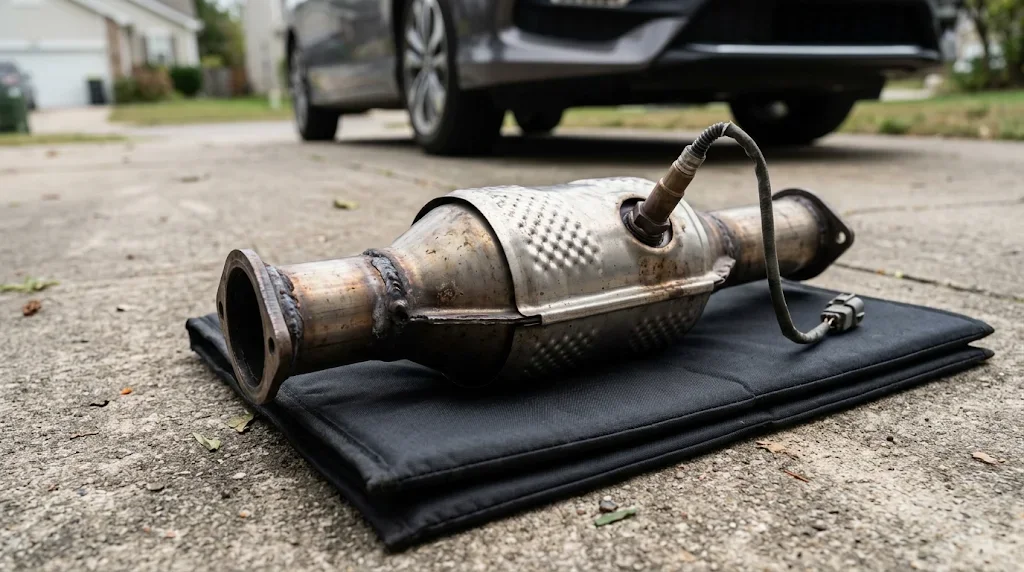
A car that struggles to accelerate and one that drives normally with a catalyst-efficiency code can both get a converter on the repair estimate. But they may have different problems: restricted exhaust flow, poor emissions conversion, or a fault affecting the computer's assessment.
That distinction helps you ask a better question than "Does it need a converter?" Ask what the inspection found: a blockage, physical damage, low conversion efficiency, or another problem that needs fixing first. Symptoms guide those checks, but none of the clues below proves the converter has failed by itself.
A damaged or melted converter substrate can obstruct the passage of exhaust gases. The car may feel short of power when you ask it to accelerate, struggle under load, or have difficulty maintaining performance. Severe restriction can interfere with normal engine operation.
Those experiences also fit fuel-delivery problems, ignition faults, and other engine issues. A restriction could also be elsewhere in the exhaust system.
Tell the mechanic when the problem occurs and what accompanies it: shaking, a flashing light, stalling, or recent engine work. Do not repeatedly accelerate hard to demonstrate it, particularly if the vehicle is losing speed or behaving unpredictably.
The converter treats exhaust gases as they pass through its internal passages. It can lose that chemical function without becoming physically plugged. That helps explain why an emissions fault may be present even when the car feels normal to drive.
A code such as P0420 concerns catalyst-system efficiency on Bank 1. It does not measure how blocked the exhaust is, and it is not an automatic instruction to replace either the converter or an oxygen sensor. Exhaust leaks, sensor operation, and engine fuel control can affect the findings.
Our P0420 diagnosis guide covers that code separately. It explains what that efficiency finding means and the checks it calls for.
Broken material inside a converter can rattle, but loose heat shields and other exhaust hardware can make similar noises. Note whether it occurs at startup, idle, or over bumps. A recording made from a safe position may help describe it; do not get underneath a running vehicle to locate the sound.
A sulfur or rotten-egg exhaust smell can also prompt concern about the converter. Fuel and engine operating conditions affect what reaches the exhaust, so describe the surrounding symptoms too.
Exhaust fumes entering the cabin need immediate attention regardless of the suspected component. Stop safely, leave the vehicle, and arrange assistance. Do not treat an open window as a repair.
The test plan should distinguish exhaust flow from emissions performance. For suspected restriction, a technician may measure backpressure at appropriate locations and compare results with vehicle-specific information. Where the pressure is measured matters because a blocked muffler or pipe can otherwise be mistaken for a converter problem.
For an efficiency concern, checks may include stored codes and operating data, exhaust leaks, oxygen-sensor response, fuel control, and manufacturer service information. A temperature check or one screenshot of sensor data should not carry the whole diagnosis.
Ask for the findings in plain terms. What supports converter replacement? What other faults were found? How will the repair be verified? Our catalytic converter service page explains the component and replacement considerations.
A converter can be damaged by conditions originating in the engine. Misfires can send unburned fuel into the exhaust and create excessive heat. Oil burning or internal coolant leaks can contaminate the catalyst's working surfaces. Impact damage and corrosion need consideration too.
If those problems remain, replacing the converter may leave the cause of the failure untouched. Mention oil or coolant consumption, earlier misfire repairs, and any previous converter replacement. Those details help the mechanic investigate why the part was damaged rather than treating the new part as the entire repair.
Pull over safely, switch off the engine, and arrange assistance for a flashing check-engine light, major power loss, stalling, smoke, or signs of overheating. A flashing check-engine light can indicate a damaging misfire even without noticeable shaking. If fire is suspected, get everyone away from the vehicle and contact emergency services. Do not park an overheated exhaust over dry grass or other combustible material.
A steady light with normal driving still calls for prompt diagnosis. It does not establish a safe mileage allowance. Explain the symptoms before deciding whether the car should be driven to inspection or transported.


It depends on the fault. Reduced conversion efficiency can trigger an emissions-related warning without obvious power loss. Internal damage can create rattling or restricted flow. Inspection should identify which condition is present and check for engine problems that contributed to it.
Exhaust leaks, oxygen-sensor faults, mixture problems, and misfires can complicate an efficiency diagnosis. A restricted muffler or pipe can resemble a blocked converter, while loose shielding can resemble an internal rattle. Testing separates those possibilities.
First confirm whether it is restricted and why. An additive cannot rebuild melted or broken internal material. Do not remove, drill, or hollow out the converter as a shortcut. Have the exhaust restriction and its underlying cause assessed before choosing a repair.
Neither should be chosen by guesswork. A technician checks sensor operation alongside exhaust leaks, fuel control, and catalyst performance using the correct procedures for that vehicle. An unusual sensor reading can reflect a condition it is reporting rather than a failed sensor.
For a flashing check-engine light, severe power loss, stalling, overheating, or smoke, pull over safely, switch off the engine, and arrange assistance. The flashing light can indicate a damaging misfire even without rough running. With fewer symptoms, seek advice about inspection and transport.
The required converter, vehicle application, access, and related exhaust or engine repairs affect the estimate. Ask for a quote that identifies the part and the reason for replacing it. Resolving a leak or sensor fault is a different job from replacing a damaged converter.
Book an Instant Car Fix mechanic to come to you. We service most areas nationwide.

Jelson monterrosa and Adrian gee Did a fantastic job work , quick and efficient , and i'm very happy with the work they did to my vehicle definitely would call them again They were absolutely the best


Used this site first time and got good results,mechanic came on time ,did all testing and diagnostic,found out our battery not working right.We happy with service.

Sergio fixed the car really fast and it drives and sounds much better than before. I would recommend having him fix any car again

Somewhat hesitant as it was a website I had never used before, but the mechanic came out. Performed the service, quick and efficient and good to go.

Although there was some confusion about our appointment window. I found customer service to be extremely helpful. My only suggestion would be that there is the opportunity to chat with the actual mechanic. I was arranging service for my father, who’s out of town and had some memory issues, so it would’ve made it much easier to coordinate and understand if I could chat with the mechanic.

Mr. Jimmy is great and very good with his work. I would recommend him again to do the work. Thank you!

My mobile mechanic Donny was fantastic. He arrived promptly, diagnosed the issue right away, and replaced my battery quickly and efficiently. He’s extremely knowledgeable and clearly an expert in his field. I really appreciated his professionalism and the smooth experience from start to finish. I would gladly use his services again and highly recommend him to anyone needing reliable mobile auto repair.

Dustin did a fantastic job getting my broken bolt out fast and efficiently. I can now continue my project. Thank you!

Needed a subframe cradle replaced for a 2014 Dodge Charger 5.7. Left the mechanic this morning. I had to go to work. Got back from work. Checked on my vehicle turned it on, and no more engine vibration inside my cabin. Job well done. Thank you.

Jelson monterrosa and Adrian gee Did a fantastic job work , quick and efficient , and i'm very happy with the work they did to my vehicle definitely would call them again They were absolutely the best
Used this site first time and got good results,mechanic came on time ,did all testing and diagnostic,found out our battery not working right.We happy with service.
Sergio fixed the car really fast and it drives and sounds much better than before. I would recommend having him fix any car again
Somewhat hesitant as it was a website I had never used before, but the mechanic came out. Performed the service, quick and efficient and good to go.
Although there was some confusion about our appointment window. I found customer service to be extremely helpful. My only suggestion would be that there is the opportunity to chat with the actual mechanic. I was arranging service for my father, who’s out of town and had some memory issues, so it would’ve made it much easier to coordinate and understand if I could chat with the mechanic.
Mr. Jimmy is great and very good with his work. I would recommend him again to do the work. Thank you!
My mobile mechanic Donny was fantastic. He arrived promptly, diagnosed the issue right away, and replaced my battery quickly and efficiently. He’s extremely knowledgeable and clearly an expert in his field. I really appreciated his professionalism and the smooth experience from start to finish. I would gladly use his services again and highly recommend him to anyone needing reliable mobile auto repair.
Dustin did a fantastic job getting my broken bolt out fast and efficiently. I can now continue my project. Thank you!
Needed a subframe cradle replaced for a 2014 Dodge Charger 5.7. Left the mechanic this morning. I had to go to work. Got back from work. Checked on my vehicle turned it on, and no more engine vibration inside my cabin. Job well done. Thank you.