Financing all Credit Types - 
Financing all Credit Types -
Financing all Credit Types -
Financing all Credit Types -
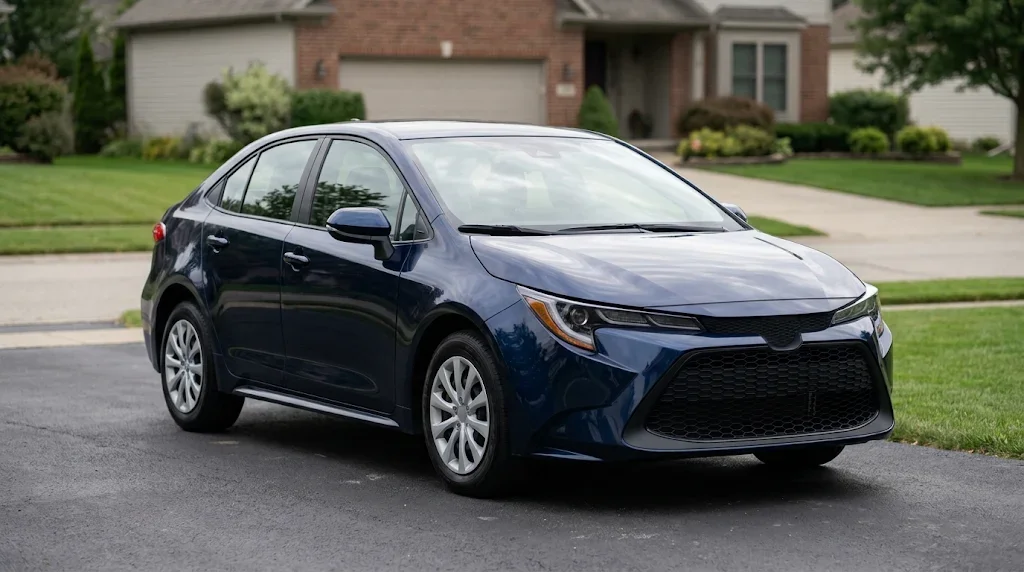
Before approving a repair, check whether your vehicle has an open safety recall. The problem on an estimate might relate to a manufacturer recall, or it might be unrelated. A matching component name alone does not establish coverage.
Manufacturers generally provide eligible safety-recall remedies free of charge. Confirm your vehicle's coverage and repair arrangements through the manufacturer. A lookup does not diagnose the car, clear it as safe to drive, or replace recall-notice instructions.
Use the NHTSA recall lookup and enter your vehicle identification number, or VIN. NHTSA also offers a license-plate search. A year, make and model search gives broader information, while a VIN search checks the particular vehicle.
Use the VIN from the car or its records, not one copied from an advertisement for a similar car. Our vehicle-identification guide explains where to find the VIN and how to compare records.
Save the result with the date you checked it. For each open recall, note the campaign number, affected system, safety risk, remedy information and any interim instructions. A recall affecting another vehicle of the same model does not prove that yours is included.
NHTSA's message "0 unrepaired recalls associated with this VIN" is a lookup result, not a clean bill of health. Its VIN search does not show recalls already repaired, and recently announced recalls may not yet include every affected VIN.
NHTSA also lists other limits: recalls more than 15 years old may not appear, except where manufacturers offer more coverage; some small-manufacturer and international-vehicle recalls are excluded; and manufacturer customer-service or other non-safety campaigns are not shown.
If you have a recall letter but the lookup shows nothing, contact the manufacturer with the VIN and campaign number. Do not discard the letter because the search result appears clear. Likewise, a zero-recall result does not explain a warning light, noise or other symptom that needs assessment.
Use the manufacturer's official recall page or contact its customer-support team or authorized dealer. Ask whether your VIN has an open safety recall, another service campaign or an extended warranty relevant to the proposed repair.
For example, Ford's recall page distinguishes recalls from Customer Satisfaction Programs, which can have time and mileage limits. Mopar's lookup covers recalls and service campaigns for its listed brands. Use the appropriate manufacturer for your vehicle rather than assuming every program follows the same rules.
Give the service advisor the symptoms and the proposed repair description. Ask whether the recall remedy addresses that concern, whether a remedy is available, and which authorized repair location can carry it out. Do not assume an independent repair will be reimbursed later.
A safety recall addresses an unreasonable safety risk or a failure to meet a safety standard. A technical service bulletin, or TSB, gives technicians information about a known problem and its diagnosis or repair. A bulletin number alone is not approval for a free repair.
An ordinary repair addresses the vehicle's condition. A warranty extension or service campaign may cover some work, but its eligibility needs checking separately. The same component can appear in a recall, a bulletin and a paid estimate without making those documents interchangeable.
If the fault remains unknown, general diagnostics and a recall-status check answer different questions. Ask what testing supports the proposed repair and whether the manufacturer has confirmed any applicable coverage.
Ask the dealer to identify the recall remedy separately from unrelated recommendations. Confirm which work is covered, whether any proposed diagnosis or additional work carries a charge, and obtain an explanation before approving paid work.
Vehicle age needs careful handling. NHTSA's owner guide describes a free-remedy limit based on whether the vehicle was more than 15 years old when the defect or noncompliance was determined, measured from its first retail sale. Manufacturers may provide coverage beyond that limit. This is not a universal countdown from the date you receive a letter.
Follow the campaign's current interim instructions, including any do-not-drive or parking restrictions. If parts or a remedy are unavailable, ask what precautions apply and how to arrange the next step. Do not treat a pending appointment as permission to ignore a restriction.
Keep the recall notice, estimate, repair invoice and completion record. If you already paid for related work, ask about the manufacturer's reimbursement process and required documents; payment back is not automatic.


Use NHTSA's public recall lookup or your manufacturer's official recall page. Enter the VIN and review the result for that vehicle. You do not need to buy a vehicle-history report to use NHTSA's recall search.
The lookup shows no unrepaired safety recall associated with that VIN in its current coverage. It does not establish that the car has never been recalled, has no mechanical faults, or has no other manufacturer campaign.
No. A technical service bulletin supplies repair information, not automatic payment coverage. Ask whether the specific repair is covered by a warranty, recall, service campaign or another manufacturer program before approving a charge.
NHTSA's year, make and model search includes manufacturer communications. Ask the dealer or repair provider whether a particular bulletin applies to your vehicle and symptoms. Finding a bulletin does not establish that its repair is needed.
Do not assume one deadline applies to every vehicle and program. Check the campaign with the manufacturer. NHTSA's federal free-remedy age limit, VIN-lookup coverage and a manufacturer's service-campaign deadline are different things; an older recall still warrants checking.
Possibly, subject to eligibility and documentation. NHTSA describes reimbursement for certain pre-recall repairs. Contact the manufacturer with your VIN, campaign number and paid invoice to confirm the applicable process, deadlines and whether the earlier work qualifies.
If your concern is separate from a recall, share your vehicle details and symptoms to request an assessment. Arrange recall remedies through the manufacturer or its authorized repair channel.

Needed a subframe cradle replaced for a 2014 Dodge Charger 5.7. Left the mechanic this morning. I had to go to work. Got back from work. Checked on my vehicle turned it on, and no more engine vibration inside my cabin. Job well done. Thank you.


Although there was some confusion about our appointment window. I found customer service to be extremely helpful. My only suggestion would be that there is the opportunity to chat with the actual mechanic. I was arranging service for my father, who’s out of town and had some memory issues, so it would’ve made it much easier to coordinate and understand if I could chat with the mechanic.

My mobile mechanic Donny was fantastic. He arrived promptly, diagnosed the issue right away, and replaced my battery quickly and efficiently. He’s extremely knowledgeable and clearly an expert in his field. I really appreciated his professionalism and the smooth experience from start to finish. I would gladly use his services again and highly recommend him to anyone needing reliable mobile auto repair.

Jelson monterrosa and Adrian gee Did a fantastic job work , quick and efficient , and i'm very happy with the work they did to my vehicle definitely would call them again They were absolutely the best

Sergio fixed the car really fast and it drives and sounds much better than before. I would recommend having him fix any car again

Dustin did a fantastic job getting my broken bolt out fast and efficiently. I can now continue my project. Thank you!

Used this site first time and got good results,mechanic came on time ,did all testing and diagnostic,found out our battery not working right.We happy with service.

Mr. Jimmy is great and very good with his work. I would recommend him again to do the work. Thank you!

Somewhat hesitant as it was a website I had never used before, but the mechanic came out. Performed the service, quick and efficient and good to go.

Needed a subframe cradle replaced for a 2014 Dodge Charger 5.7. Left the mechanic this morning. I had to go to work. Got back from work. Checked on my vehicle turned it on, and no more engine vibration inside my cabin. Job well done. Thank you.
Although there was some confusion about our appointment window. I found customer service to be extremely helpful. My only suggestion would be that there is the opportunity to chat with the actual mechanic. I was arranging service for my father, who’s out of town and had some memory issues, so it would’ve made it much easier to coordinate and understand if I could chat with the mechanic.
My mobile mechanic Donny was fantastic. He arrived promptly, diagnosed the issue right away, and replaced my battery quickly and efficiently. He’s extremely knowledgeable and clearly an expert in his field. I really appreciated his professionalism and the smooth experience from start to finish. I would gladly use his services again and highly recommend him to anyone needing reliable mobile auto repair.
Jelson monterrosa and Adrian gee Did a fantastic job work , quick and efficient , and i'm very happy with the work they did to my vehicle definitely would call them again They were absolutely the best
Sergio fixed the car really fast and it drives and sounds much better than before. I would recommend having him fix any car again
Dustin did a fantastic job getting my broken bolt out fast and efficiently. I can now continue my project. Thank you!
Used this site first time and got good results,mechanic came on time ,did all testing and diagnostic,found out our battery not working right.We happy with service.
Mr. Jimmy is great and very good with his work. I would recommend him again to do the work. Thank you!
Somewhat hesitant as it was a website I had never used before, but the mechanic came out. Performed the service, quick and efficient and good to go.