Financing all Credit Types - 
Financing all Credit Types -
Financing all Credit Types -
Financing all Credit Types -
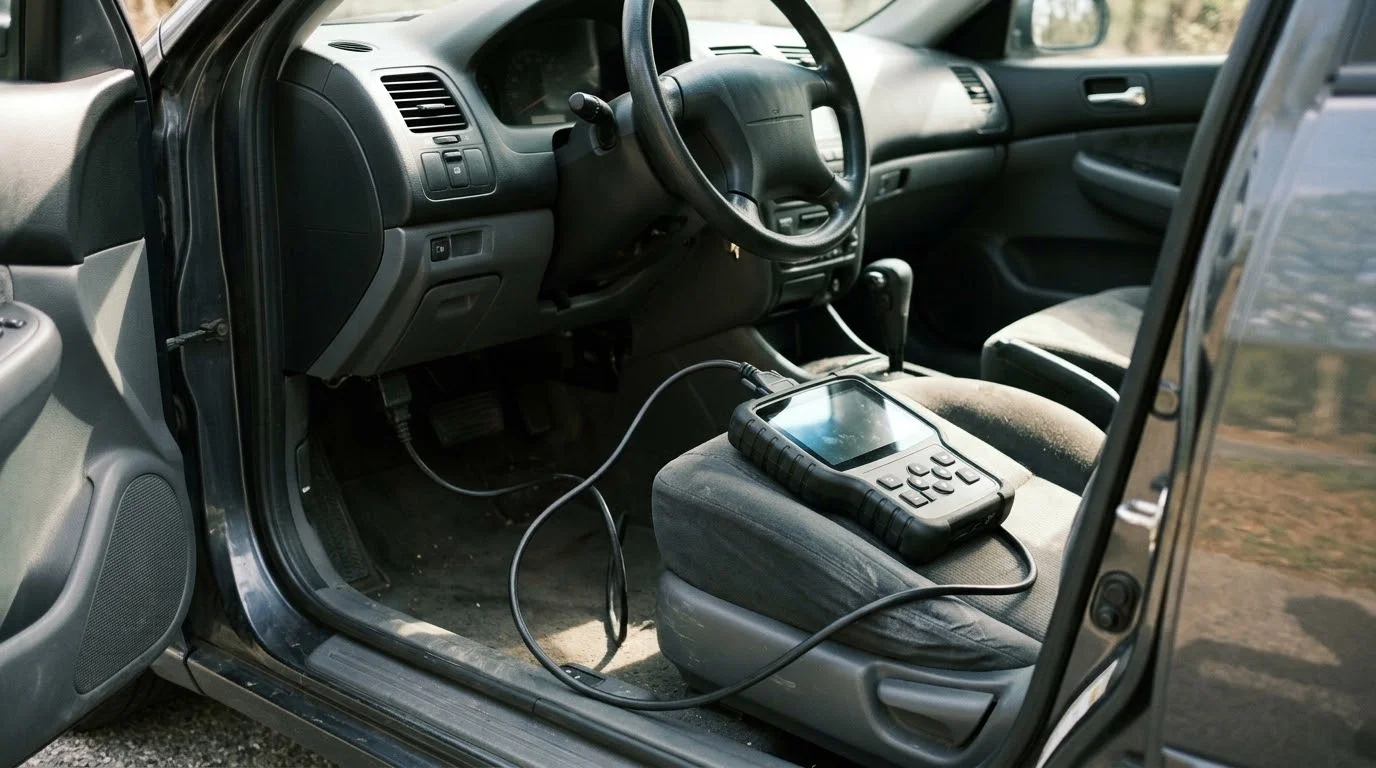
A permanent emissions code can still be there after the repair is finished. The car has to run the relevant self-test and verify the result before it removes that record; a scan-tool reset or battery disconnection cannot erase it. That code alone does not tell you the repair failed, and it does not tell you the car is ready to pass an emissions inspection either.
Start with two questions: has the original fault come back, and has the car had the chance to check the repair? Another reset will not answer them.
Look at the label beside the code, not just the number. A scanner may show the same number in several lists.
Pending means the computer detected a condition that may not yet meet its criteria for a confirmed fault. An ordinary erase command can generally clear this record.
Confirmed or stored means the fault met the vehicle's setting criteria. These codes can generally be erased too, but the label alone does not prove the fault is happening now or identify the part that caused it. An unresolved fault can set an erased code again.
Permanent emissions code means the vehicle is retaining a record until its own verification requirements are met. An ordinary erase command cannot remove it.
These are emissions-related OBD categories. A scanner's manufacturer-specific "history" list, an airbag code or another module's records may work differently. Do not apply permanent-emissions-code rules to every label on every scanner.
Keep a photo or copy of the whole scan report. A number such as P0442 or P0420 leaves out useful information. The code status, whether the computer is commanding the check-engine light on, and the readiness results all matter. A readiness monitor marked "complete" has run; that word alone does not tell you it passed.
A repair and the car's verification of that repair do not always finish together. The relevant onboard monitor needs the right conditions to run and must find that the original malfunction is gone. Temperature, engine load, ambient conditions and other requirements can affect when that happens. Adding miles does not guarantee a particular test ran.
There are two different paths from here. The fault may be repaired, with the permanent code still waiting for successful verification. Or the monitor may detect the fault again, which calls for further diagnosis. The dashboard light being off cannot settle which path applies on its own.
Ford's published Permanent DTC Overview gives an example of a repaired vehicle retaining a permanent code until a successful qualifying cycle. It describes a particular manufacturer strategy, not a driving recipe for every Ford or every other car. Use current repair information for the exact vehicle.
Ask for a post-repair report and a comparison with the original findings:
Has the original pending or confirmed fault returned?
Is the computer commanding the check-engine light on or off?
Has the relevant monitor completed, and what do its results show?
Is there a documented software issue or permanent-code clearing concern for this vehicle?
If verification cannot finish, what needs checking next?
The next step might be the manufacturer's verification process. It might be finding out why a monitor cannot run, or diagnosing a returning fault. It should not automatically be another replacement of the same part. A code names a condition the car monitors; testing still has to find the cause.
Resist the temptation to keep pressing "clear." Erasing eligible emissions data can remove freeze-frame information and reset readiness, leaving less evidence of the original problem and more tests to complete. It does not force out the permanent code. Save the report before any clearing called for in the technician's procedure.
No single number of miles, starts or days works for every permanent code. The vehicle, fault, monitor and operating conditions make a difference. Follow the verification procedure for the year, model, engine and code rather than a generic sequence found online.
Do not try special driving maneuvers or keep driving a poorly running car just to finish a monitor. A flashing check-engine light, pronounced shaking, stalling, major power loss, smoke or overheating means stop safely and arrange help. A steady light with apparently normal operation does not establish a safe mileage allowance.
California's Bureau of Automotive Repair treats permanent codes, readiness and other Smog Check requirements separately. Its current reference applies the permanent-code check to supported 2010-and-newer vehicles, with specified exceptions.
One exception disregards a remaining permanent code for that part of the inspection after both at least 15 warm-up cycles and at least 200 miles since OBD information was last cleared. Both conditions matter. This does not erase the code, show that the original monitor passed or guarantee the car will pass the whole inspection. Other requirements, including the applicable readiness and malfunction-indicator-light criteria, still apply.
It is a California inspection exception, not a nationwide clearing rule or advice to drive every repaired car 200 miles. Check the current official program where your car is registered. Keep the inspection report: a permanent-code failure may need a different response from incomplete readiness or an illuminated warning light.
Before arranging another visit, send Instant Car Fix the vehicle details, full scan report, repair invoice and any emissions-test report. Say whether the light came back and how the car is running. Ask what needs assessing before approving another part or a code-clearing visit, and confirm availability and whether the required tests can be done at your location.
If this started after a battery replacement, our battery-reset guide covers the separate readiness and relearning questions. If the code names an ignition coil, our P0351 guide explains why that name is the start of testing, not an instruction to buy a coil.


Yes. The car may still need to run the relevant monitor and verify that the original malfunction is gone. The permanent code alone does not mean the repair failed. Look at the full report for returning pending or confirmed faults, the warning-light status and the monitor results.
No. A normal erase command or battery disconnection cannot remove a permanent emissions code. The car clears it when its verification requirements are met. Repeatedly erasing other data can reset readiness and lose useful diagnostic information without removing that permanent record.
There is no number that works for every vehicle. The relevant monitor has to run under the conditions required for that car and fault. Use the manufacturer's verification procedure, not a generic mileage target. Do not keep driving a poorly running car to try to finish the test.
No. The light can be off while a permanent code remains. The light, code status and readiness results tell you different things. A dark dashboard light alone does not show that the original monitor verified the repair or that the car will pass inspection.
That depends on the vehicle and inspection program. California checks supported 2010-and-newer vehicles, with exceptions. One involves both at least 15 warm-up cycles and 200 miles since OBD information was last cleared. It does not erase the code or guarantee an overall pass. Check the current rules where the car is registered.
Send the vehicle details, complete scan report, recent repair invoice and any emissions-test report. Explain whether the light returned and whether the car has symptoms. Before approving another part, ask whether the original fault returned, whether its monitor ran and what still needs checking.
Instant Car Fix can help arrange a diagnostic assessment to determine whether the original fault has returned or additional verification is needed. Share your vehicle details, diagnostic report and recent repair history to request a quote. Service availability and testing capabilities depend on your vehicle and location.

Needed a subframe cradle replaced for a 2014 Dodge Charger 5.7. Left the mechanic this morning. I had to go to work. Got back from work. Checked on my vehicle turned it on, and no more engine vibration inside my cabin. Job well done. Thank you.


Was very helpful and went out of his way to run multiple Diagnostics to find the issue, got the job done very fast and put me back on the road.

Somewhat hesitant as it was a website I had never used before, but the mechanic came out. Performed the service, quick and efficient and good to go.

Sergio fixed the car really fast and it drives and sounds much better than before. I would recommend having him fix any car again

Mr. Jimmy is great and very good with his work. I would recommend him again to do the work. Thank you!

Although there was some confusion about our appointment window. I found customer service to be extremely helpful. My only suggestion would be that there is the opportunity to chat with the actual mechanic. I was arranging service for my father, who’s out of town and had some memory issues, so it would’ve made it much easier to coordinate and understand if I could chat with the mechanic.

These guys show up and do great work. I've had a couple issues with my vehicle and Instant Car Fix helped me fully diagnose and repair all issues with relative ease. Great customer service and great communication. Thanks guys!

Great service! I appreciate how clear Jean Carlos explained everything and even let me know what other areas of my Jeep needed attention. I also appreciated Instant Fix following up with me to schedule my next service. 10/10 would definitely recommend

Dustin did a fantastic job getting my broken bolt out fast and efficiently. I can now continue my project. Thank you!

Needed a subframe cradle replaced for a 2014 Dodge Charger 5.7. Left the mechanic this morning. I had to go to work. Got back from work. Checked on my vehicle turned it on, and no more engine vibration inside my cabin. Job well done. Thank you.
Was very helpful and went out of his way to run multiple Diagnostics to find the issue, got the job done very fast and put me back on the road.
Somewhat hesitant as it was a website I had never used before, but the mechanic came out. Performed the service, quick and efficient and good to go.
Sergio fixed the car really fast and it drives and sounds much better than before. I would recommend having him fix any car again
Mr. Jimmy is great and very good with his work. I would recommend him again to do the work. Thank you!
Although there was some confusion about our appointment window. I found customer service to be extremely helpful. My only suggestion would be that there is the opportunity to chat with the actual mechanic. I was arranging service for my father, who’s out of town and had some memory issues, so it would’ve made it much easier to coordinate and understand if I could chat with the mechanic.
These guys show up and do great work. I've had a couple issues with my vehicle and Instant Car Fix helped me fully diagnose and repair all issues with relative ease. Great customer service and great communication. Thanks guys!
Great service! I appreciate how clear Jean Carlos explained everything and even let me know what other areas of my Jeep needed attention. I also appreciated Instant Fix following up with me to schedule my next service. 10/10 would definitely recommend
Dustin did a fantastic job getting my broken bolt out fast and efficiently. I can now continue my project. Thank you!