Financing all Credit Types - 
Financing all Credit Types -
Financing all Credit Types -
Financing all Credit Types -
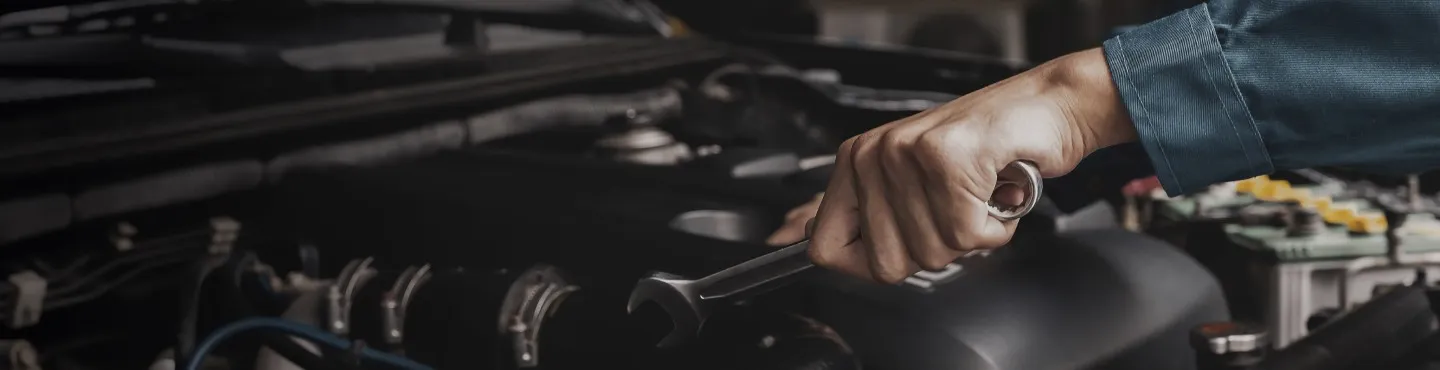
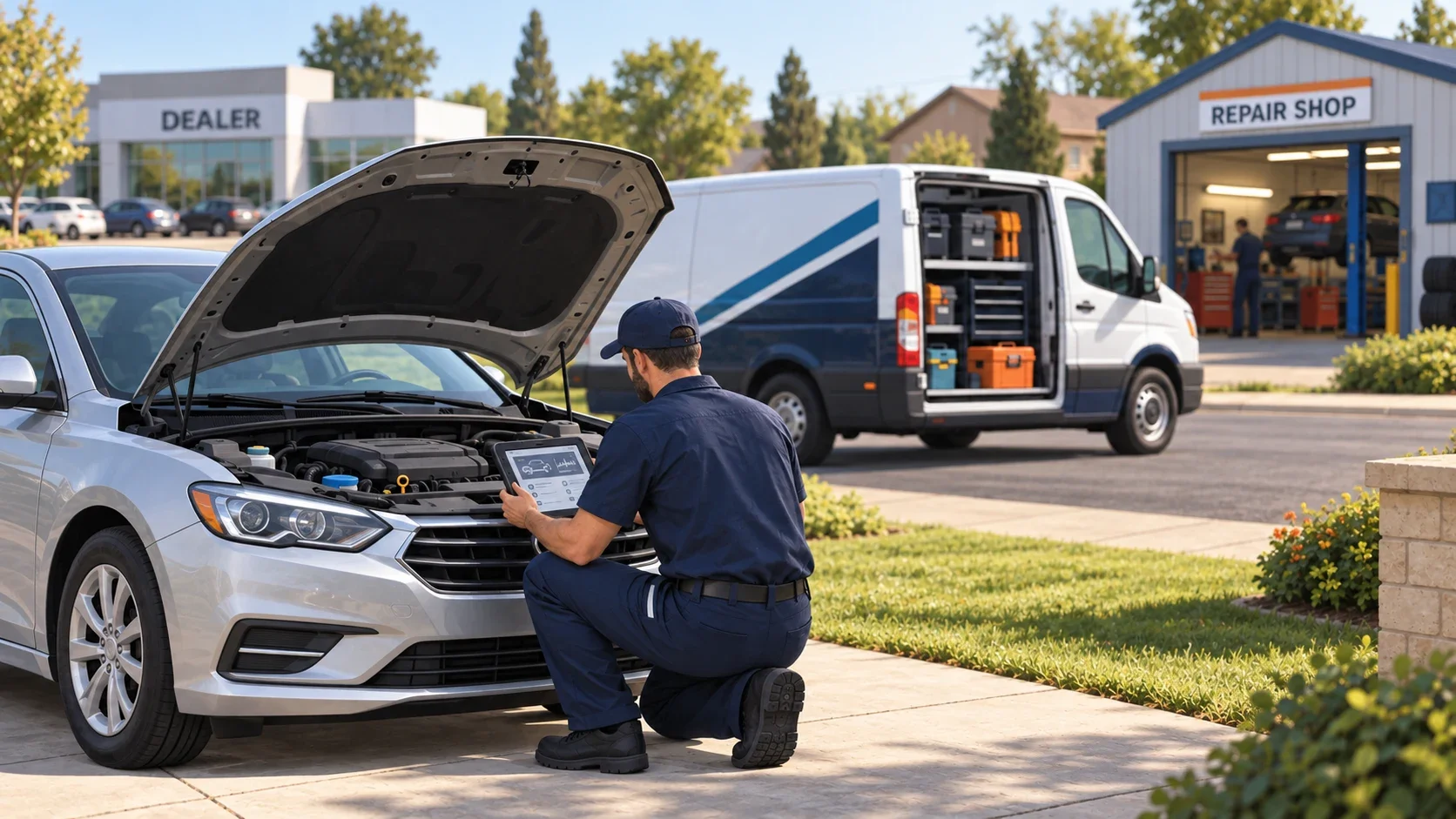
You have four real options: the dealership, an independent shop, a chain store, or a mobile mechanic who comes to you. None of them is the right answer for every repair. The best choice depends on what is broken, whether the car is under warranty, and how much disruption you can absorb that week.
Safety recall or factory warranty claim? Start with the dealer. Some programming work belongs there too, though not all of it.
Complex diagnosis, transmission or engine work, or an alignment? An independent shop with the right equipment.
Tires, batteries, or a quick basic service while you shop? A chain store can be fine.
Most common repairs, a car that will not start, or a schedule that cannot spare a day? A mobile mechanic.
Money is only part of the bill. The dealership route often costs the most for out-of-warranty work, but the bigger price for many people is the logistics: booking days out, arranging a ride, and losing the car for a day or more.
Independent shops usually charge less than dealers and build real relationships with regulars, but you still drive there, wait or arrange a ride, and work around their schedule. The relationship angle is underrated: a shop that knows your car's history spots patterns a first-time mechanic will miss, and a service record kept in one place helps when you sell the car. If you find a good local shop, it is worth keeping.
Mobile mechanics flip the logistics. The repair happens in your driveway or office parking lot while you get on with your day. There is no ride to arrange. If the car is parked somewhere a mechanic can work, an on-site diagnosis may save you a tow. If the repair needs shop equipment, you may still need one. Our guide on what to do when the car will not start and you are choosing between a mobile mechanic or a tow walks through that exact decision.
Some jobs genuinely belong at the dealership. For a safety recall, follow the manufacturer's notice for the free remedy. For a factory warranty claim, check what is covered and where to take the car. Using an independent mechanic for routine maintenance does not by itself void your warranty, though coverage can be denied for damage caused by improper work. Some software updates, immobilizer programming, and brand-specific technical bulletins need dealer-level tools, though many independents handle common programming jobs too.
There is one more dealer advantage worth naming: brand-specific experience. Their techs see the same models all day, so they know the common failures on your exact car. For almost everything else, though, you are paying dealership rates for work a good independent or mobile mechanic does every day.
Shops earn their keep on the jobs that need a building: alignments, major engine and transmission work, anything that needs a lift for hours, and deep electrical diagnosis with a full tool wall behind it. A good independent shop with experienced techs is hard to beat for that tier of repair.
The trade-off is the drop-off routine and the phone tag. For a big repair, most people accept that trade. For a starter or an alternator, many would rather not.
Chain stores earn their place on the simple, standardized jobs: tires, batteries, wiper blades, and basic fluids, usually while you wait or shop nearby. What you give up is depth and continuity. For a tricky diagnosis or a bigger repair, an independent shop or a mobile mechanic is the better bet.
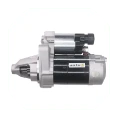
Mobile service covers the large middle ground of car repair: starters, alternators, batteries, brakes, belts, sensors, radiators, and most diagnosis. If the job needs hand tools and a scan tool rather than a lift, it can probably happen where the car sits. Something like a starter replacement is a textbook mobile job, and we wrote about how a mobile mechanic replaces a starter at your home if you want to see the process step by step.
Two situations make mobile the obvious winner. The first is the non-starter: an on-site diagnosis can save you the tow when the car is parked somewhere a mechanic can work. The second is the packed schedule: the mechanic works while you are in a meeting, making dinner, or putting kids to bed.
A warning-light problem is a good example. Instead of driving across town with the light on, a mobile check engine light diagnosis brings the scan tool to the driveway and tells you what you are dealing with before you commit to anything.
Whichever route you pick, five checks tell you most of what you need to know:
Written estimate before work. You should approve the job and the parts before a wrench turns.
A warranty on the repair. Ask what is covered, parts and labor, and for how long. Any outfit worth hiring answers this clearly.
Recent reviews, read for content. Look for reviews that describe the actual repair, not just star counts.
A real diagnosis, not parts-darts. Good mechanics test before they replace. Be wary of anyone quoting a fix for an undiagnosed problem.
Straight answers to "what happens if this does not fix it?" The reply tells you whether you are dealing with a professional.
Match the repair to the option, not the other way around. Start with the dealer for a factory warranty claim or safety recall, use a shop for lift work and heavy repairs, and call a mobile mechanic for the wide middle, especially when the car will not start or your week has no room for a service wait.
The diagnostic fee applies even if the mechanic finds that the repair needs a shop. When Instant Car Fix supplies both parts and labor, eligible repairs are covered for 12 months or 12,000 miles, whichever comes first. Labor-only jobs are not covered.


Compare written estimates rather than averages, and include any towing or transportation costs in the total. The estimates will answer that for your repair. If the car is parked somewhere a mechanic can work, an on-site diagnosis may save you a tow; if the repair needs shop equipment, you may still need one. A mobile visit also skips the rideshare home and the day off work.
Not by itself. Routine maintenance and repairs from a qualified independent or mobile mechanic do not void the factory warranty, as long as the work is done properly and documented. Coverage can still be denied for damage caused by improper work, so records matter. For a safety recall, follow the manufacturer's notice for the free remedy; for a warranty claim, check what is covered and where to take the car. Keep your receipts either way.
Anything that needs a lift or heavy shop equipment: wheel alignments, most transmission rebuilds, major engine work, and structural repairs. A good mobile service will tell you upfront when your job belongs in a shop instead of quoting it anyway.
Treat it like hiring any pro. Look for a written estimate before work starts, a stated warranty on the repair, a trail of recent reviews describing real jobs, and clear answers about what happens if the first fix does not solve it. If any of those are missing, keep looking.
Yes. A scan-tool reading and a proper test cost far less than replacing the wrong part. Whether it is a shop or a mobile mechanic, the first step should be confirming the cause, then a written estimate for the fix. Be cautious of anyone who wants to swap parts on a guess.
For simple, high-volume work: tires, batteries, wipers, and basic fluid services, especially if you can wait onsite. For diagnosis or anything beyond the basics, you will usually get more experienced attention from an independent shop or a mobile mechanic.
If the car is parked somewhere a mechanic can work, an on-site diagnosis may save you a tow. If the repair needs shop equipment, you may still need one. Many no-start causes, from batteries to starters to fuel pumps, can be fixed right where the car sits.
Instant Car Fix sends experienced mobile mechanics to your home or office across the country. Get a written estimate upfront and book online in minutes.

Dustin did a fantastic job getting my broken bolt out fast and efficiently. I can now continue my project. Thank you!


Sergio fixed the car really fast and it drives and sounds much better than before. I would recommend having him fix any car again

Somewhat hesitant as it was a website I had never used before, but the mechanic came out. Performed the service, quick and efficient and good to go.

Great service! I appreciate how clear Jean Carlos explained everything and even let me know what other areas of my Jeep needed attention. I also appreciated Instant Fix following up with me to schedule my next service. 10/10 would definitely recommend

Was very helpful and went out of his way to run multiple Diagnostics to find the issue, got the job done very fast and put me back on the road.

Although there was some confusion about our appointment window. I found customer service to be extremely helpful. My only suggestion would be that there is the opportunity to chat with the actual mechanic. I was arranging service for my father, who’s out of town and had some memory issues, so it would’ve made it much easier to coordinate and understand if I could chat with the mechanic.

These guys show up and do great work. I've had a couple issues with my vehicle and Instant Car Fix helped me fully diagnose and repair all issues with relative ease. Great customer service and great communication. Thanks guys!

Mr. Jimmy is great and very good with his work. I would recommend him again to do the work. Thank you!

The mechanic came and diagnosed the bad battery quickly and efficiently! He purchased the battery and replaced it in a timely manner.

Dustin did a fantastic job getting my broken bolt out fast and efficiently. I can now continue my project. Thank you!
Sergio fixed the car really fast and it drives and sounds much better than before. I would recommend having him fix any car again
Somewhat hesitant as it was a website I had never used before, but the mechanic came out. Performed the service, quick and efficient and good to go.
Great service! I appreciate how clear Jean Carlos explained everything and even let me know what other areas of my Jeep needed attention. I also appreciated Instant Fix following up with me to schedule my next service. 10/10 would definitely recommend
Was very helpful and went out of his way to run multiple Diagnostics to find the issue, got the job done very fast and put me back on the road.
Although there was some confusion about our appointment window. I found customer service to be extremely helpful. My only suggestion would be that there is the opportunity to chat with the actual mechanic. I was arranging service for my father, who’s out of town and had some memory issues, so it would’ve made it much easier to coordinate and understand if I could chat with the mechanic.
These guys show up and do great work. I've had a couple issues with my vehicle and Instant Car Fix helped me fully diagnose and repair all issues with relative ease. Great customer service and great communication. Thanks guys!
Mr. Jimmy is great and very good with his work. I would recommend him again to do the work. Thank you!
The mechanic came and diagnosed the bad battery quickly and efficiently! He purchased the battery and replaced it in a timely manner.