Financing all Credit Types - 
Financing all Credit Types -
Financing all Credit Types -
Financing all Credit Types -
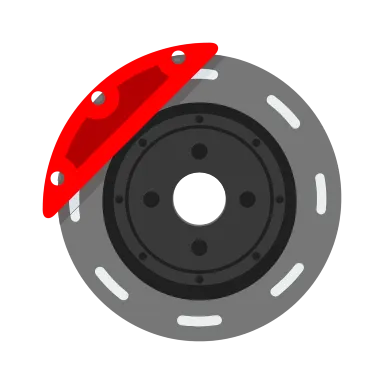
Your brakes work hydraulically: pressing the pedal pushes brake fluid under pressure from the master cylinder to the calipers at each wheel. The brake lines - the rigid steel tubes that run along the underside of the car - are what carry that fluid most of the way, handing off to short flexible brake hoses near the wheels.
Steel lines hold up for years, but road salt and moisture corrode them from the outside, and old brake fluid can corrode them from the inside. A line that leaks or bursts loses pressure, and hydraulic brakes without pressure do not stop the car.
Warning signs include a brake pedal that feels spongy or sinks slowly toward the floor under steady pressure, a brake warning light, visible fluid near a wheel or along the underside of the car, or a fluid level that keeps dropping in the reservoir. Under the car, heavy rust on a line - or a line that looks wet - is a red flag even before the pedal feels different. These symptoms overlap with a failing master cylinder or a bad hose, and a pedal that sinks can have several causes, so the first step is confirming where the pressure is going. Our brake pedal goes to floor diagnosis page covers that pattern in more detail.
A mechanic inspects the full length of the lines for corrosion, wet spots, and damage, checks the hoses for cracking or swelling under pressure, and traces any fluid to its source. Because a rusted line often means its neighbors are in similar condition, the other lines are inspected at the same time, and you hear about anything beyond the agreed repair before it is touched.
The damaged line or section is disconnected and removed, and the new line is routed and secured the way the original ran, with fittings tightened to specification. The system is then flushed with fresh brake fluid from a sealed container - brake fluid absorbs moisture over time, and a line job is the right moment to clear it - and bled until no air remains, since trapped air is what makes a pedal feel spongy. A brake flush is part of doing this job right, not an upsell. The mechanic finishes with a firm-pedal check and a leak inspection before the car moves. You get upfront pricing before any work starts. When Instant Car Fix supplies the parts and labor, eligible repairs include our 12-month/12,000-mile warranty, whichever comes first, subject to our warranty terms. Labor-only services are not covered.
This is the one repair on this site where the honest answer is simply no. A corroded or leaking line can let the pedal go to the floor with little warning, and there is no safe way to nurse a hydraulic leak home. If your pedal feels soft, sinks, or the brake warning light is on, park the car and arrange assistance. If the line is only corroded and not yet leaking, the car will still stop - but rust does not improve, and this is a fix-it-now item, not a watch-and-wait one.


Time and cost depend on which line or section failed, how it is routed along the vehicle, and how much corrosion there is at the fittings and connections. We confirm these with your quote. You get an upfront price before any work starts, and any additional work identified during the job is explained and requires your approval before proceeding.
In many cases, yes. Brake lines run along the underside of the vehicle, so the work needs room to access them safely. Whether the job can be done at your home or office depends on your vehicle and the line involved, and the mechanic confirms the scope before work starts. Tell us your car and ZIP code when you get a quote and we will confirm feasibility before you book.
Time depends on which line failed, how corroded the surrounding fittings are, and the flush and bleed the system needs afterward. We confirm timing with your quote before any work starts.
When Instant Car Fix supplies the parts and labor, eligible repairs include our 12-month/12,000-mile warranty, whichever comes first, subject to our warranty terms. Labor-only services are not covered.
Brake lines are the rigid steel tubes that carry brake fluid along the body of the car. Brake hoses are the short, flexible sections near each wheel that bend as the suspension moves and the wheels steer. Lines usually fail from rust and corrosion; hoses usually fail from cracking, swelling, or internal deterioration. Both carry the same fluid under the same pressure, and a leak in either one is a safety problem.
No. A leaking or broken line can let the pedal go to the floor with little warning, and hydraulic brakes without pressure cannot stop the car. Park the car and arrange assistance. If the line is only corroded and not yet leaking, the car will still stop, but rust does not improve - treat it as a fix-it-now item.
It is possible, but it is a safety-critical hydraulic repair: the new line has to be bent and routed like the original, fittings need correct flares tightened to specification, and the system must be flushed and fully bled afterward or the pedal stays spongy. Mistakes do not show until you need the brakes, so most owners have this one done professionally.
No. Brake lines carry very high hydraulic pressure every time you stop, and no epoxy patch can hold that reliably - a patched line can fail without warning. A leaking line is replaced, not glued or taped.
Get a real Brake Line service from a mobile mechanic near you, no workshop visit needed.
No commitment • See pricing instantly

Used this site first time and got good results,mechanic came on time ,did all testing and diagnostic,found out our battery not working right.We happy with service.


Needed a subframe cradle replaced for a 2014 Dodge Charger 5.7. Left the mechanic this morning. I had to go to work. Got back from work. Checked on my vehicle turned it on, and no more engine vibration inside my cabin. Job well done. Thank you.

Dustin did a fantastic job getting my broken bolt out fast and efficiently. I can now continue my project. Thank you!

Sergio fixed the car really fast and it drives and sounds much better than before. I would recommend having him fix any car again

Mr. Jimmy is great and very good with his work. I would recommend him again to do the work. Thank you!

My mobile mechanic Donny was fantastic. He arrived promptly, diagnosed the issue right away, and replaced my battery quickly and efficiently. He’s extremely knowledgeable and clearly an expert in his field. I really appreciated his professionalism and the smooth experience from start to finish. I would gladly use his services again and highly recommend him to anyone needing reliable mobile auto repair.

Although there was some confusion about our appointment window. I found customer service to be extremely helpful. My only suggestion would be that there is the opportunity to chat with the actual mechanic. I was arranging service for my father, who’s out of town and had some memory issues, so it would’ve made it much easier to coordinate and understand if I could chat with the mechanic.

Somewhat hesitant as it was a website I had never used before, but the mechanic came out. Performed the service, quick and efficient and good to go.

Jelson monterrosa and Adrian gee Did a fantastic job work , quick and efficient , and i'm very happy with the work they did to my vehicle definitely would call them again They were absolutely the best

Used this site first time and got good results,mechanic came on time ,did all testing and diagnostic,found out our battery not working right.We happy with service.
Needed a subframe cradle replaced for a 2014 Dodge Charger 5.7. Left the mechanic this morning. I had to go to work. Got back from work. Checked on my vehicle turned it on, and no more engine vibration inside my cabin. Job well done. Thank you.
Dustin did a fantastic job getting my broken bolt out fast and efficiently. I can now continue my project. Thank you!
Sergio fixed the car really fast and it drives and sounds much better than before. I would recommend having him fix any car again
Mr. Jimmy is great and very good with his work. I would recommend him again to do the work. Thank you!
My mobile mechanic Donny was fantastic. He arrived promptly, diagnosed the issue right away, and replaced my battery quickly and efficiently. He’s extremely knowledgeable and clearly an expert in his field. I really appreciated his professionalism and the smooth experience from start to finish. I would gladly use his services again and highly recommend him to anyone needing reliable mobile auto repair.
Although there was some confusion about our appointment window. I found customer service to be extremely helpful. My only suggestion would be that there is the opportunity to chat with the actual mechanic. I was arranging service for my father, who’s out of town and had some memory issues, so it would’ve made it much easier to coordinate and understand if I could chat with the mechanic.
Somewhat hesitant as it was a website I had never used before, but the mechanic came out. Performed the service, quick and efficient and good to go.
Jelson monterrosa and Adrian gee Did a fantastic job work , quick and efficient , and i'm very happy with the work they did to my vehicle definitely would call them again They were absolutely the best