Financing all Credit Types - 
Financing all Credit Types -
Financing all Credit Types -
Financing all Credit Types -
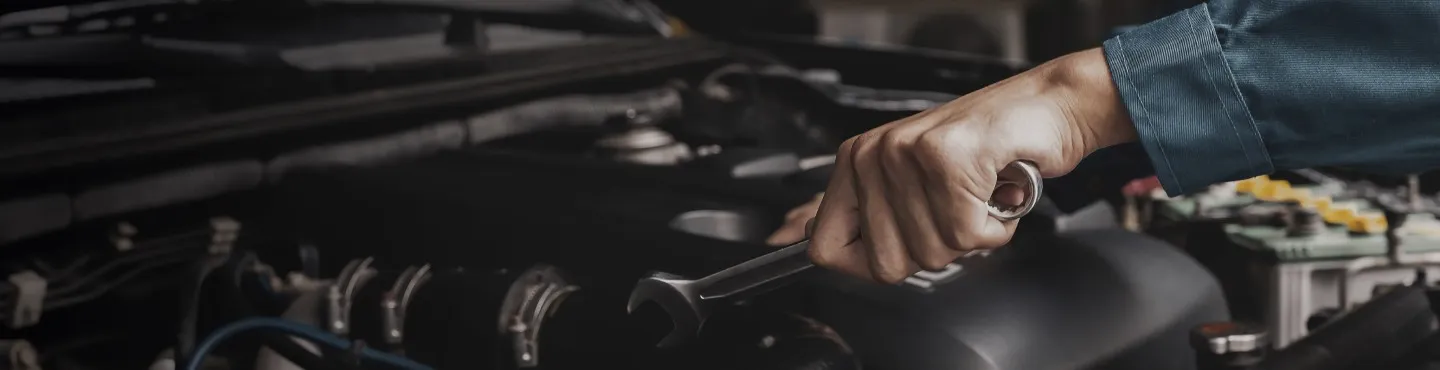


The rear axle carries the weight of the back of the vehicle and delivers power to the rear wheels. On a solid-axle truck or SUV it is a single housing with shafts inside; on many cars it refers to the rear half-shafts or the axle assembly. Either way, it is what keeps the rear wheels turning and located.
Noise is the usual first sign: a hum or growl that rises with road speed can point to worn axle bearings, while clunks on acceleration or deceleration suggest worn gears or excessive play. Vibration, oil leaking from the axle seals or housing, and uneven rear tire wear also belong on the list.
Mileage and abuse. Bearings and gears wear with age, especially if the gear oil was never changed or ran low from a leaking seal. Heavy towing, overloading, and hard impacts - potholes, curbs - accelerate the wear. On trucks, a bent axle tube after an impact is its own failure.
Cautiously, for a short time - but noise from a rear axle is a wear signal, not background sound. A failed axle bearing can let the wheel assembly move or, on some designs, let the shaft walk out. Leaking gear oil eventually means metal on metal. Plan the repair before a long trip, not after.
They live together but are not the same thing. The differential is the gear set in the middle of the axle that splits power between the wheels and lets them turn at different speeds. The axle is the whole assembly - housing, shafts, bearings - that the differential sits inside. A problem in one is usually inspected with the other.
Most drivers describe a humming or growling that tracks road speed, not engine speed - louder at highway pace, and it may change when you swerve gently left or right as the bearings load and unload. A rhythmic clunk or whine under power points more toward the gear set. Either way, new rear-end noise deserves a listen from a mechanic.
Get a real Rear Axle service from a mobile mechanic near you, no workshop visit needed.
No commitment • See pricing instantly

Sergio fixed the car really fast and it drives and sounds much better than before. I would recommend having him fix any car again


Great service! I appreciate how clear Jean Carlos explained everything and even let me know what other areas of my Jeep needed attention. I also appreciated Instant Fix following up with me to schedule my next service. 10/10 would definitely recommend

Somewhat hesitant as it was a website I had never used before, but the mechanic came out. Performed the service, quick and efficient and good to go.

These guys show up and do great work. I've had a couple issues with my vehicle and Instant Car Fix helped me fully diagnose and repair all issues with relative ease. Great customer service and great communication. Thanks guys!

Mr. Jimmy is great and very good with his work. I would recommend him again to do the work. Thank you!

Dustin did a fantastic job getting my broken bolt out fast and efficiently. I can now continue my project. Thank you!

Was very helpful and went out of his way to run multiple Diagnostics to find the issue, got the job done very fast and put me back on the road.

The mechanic came and diagnosed the bad battery quickly and efficiently! He purchased the battery and replaced it in a timely manner.

Although there was some confusion about our appointment window. I found customer service to be extremely helpful. My only suggestion would be that there is the opportunity to chat with the actual mechanic. I was arranging service for my father, who’s out of town and had some memory issues, so it would’ve made it much easier to coordinate and understand if I could chat with the mechanic.

Sergio fixed the car really fast and it drives and sounds much better than before. I would recommend having him fix any car again
Great service! I appreciate how clear Jean Carlos explained everything and even let me know what other areas of my Jeep needed attention. I also appreciated Instant Fix following up with me to schedule my next service. 10/10 would definitely recommend
Somewhat hesitant as it was a website I had never used before, but the mechanic came out. Performed the service, quick and efficient and good to go.
These guys show up and do great work. I've had a couple issues with my vehicle and Instant Car Fix helped me fully diagnose and repair all issues with relative ease. Great customer service and great communication. Thanks guys!
Mr. Jimmy is great and very good with his work. I would recommend him again to do the work. Thank you!
Dustin did a fantastic job getting my broken bolt out fast and efficiently. I can now continue my project. Thank you!
Was very helpful and went out of his way to run multiple Diagnostics to find the issue, got the job done very fast and put me back on the road.
The mechanic came and diagnosed the bad battery quickly and efficiently! He purchased the battery and replaced it in a timely manner.
Although there was some confusion about our appointment window. I found customer service to be extremely helpful. My only suggestion would be that there is the opportunity to chat with the actual mechanic. I was arranging service for my father, who’s out of town and had some memory issues, so it would’ve made it much easier to coordinate and understand if I could chat with the mechanic.