Financing all Credit Types - 
Financing all Credit Types -
Financing all Credit Types -
Financing all Credit Types -
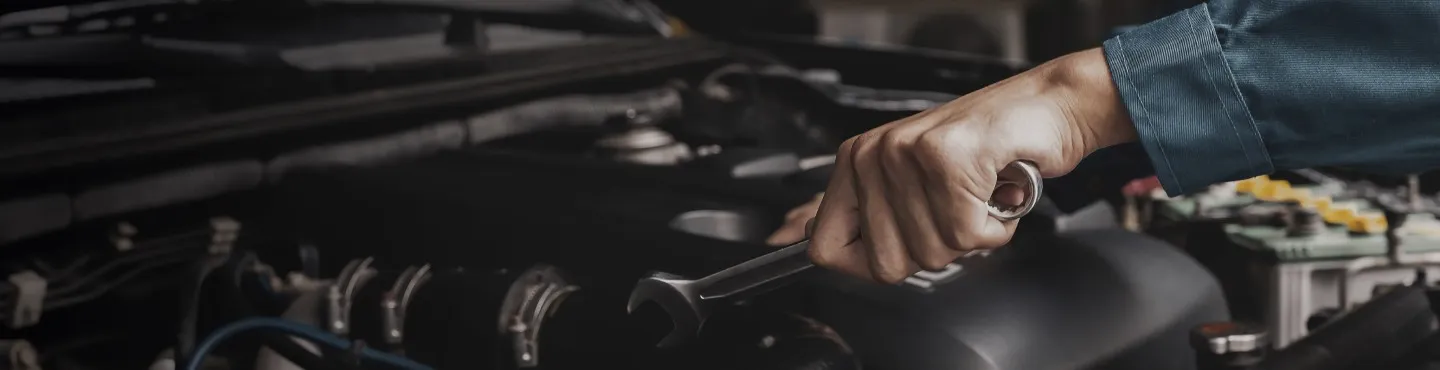
On vehicles with rack-and-pinion steering, the steering rod, also called the inner tie rod or rack rod, is the link between the steering rack and the outer tie rod end at the wheel. When it wears or bends, the wheel it controls no longer holds its exact position, and steering feel, tire wear and alignment all suffer together. This page covers how inner rod problems show up, how they differ from outer tie rod end failures, and what replacement involves.
In this layout each side of the steering has two parts working as one assembly: the outer tie rod end at the wheel, and the steering rod running from it back to the rack. The rod threads into the outer end at one side and meets the rack through a ball socket at the other, the rack-side joint and part of the inner rod protected by a bellows boot. When you turn the wheel, the rack pushes or pulls this rod, and the wheel follows. Because the rod sets the wheel's toe position, even small wear in its socket changes where the tire points.
The bellows boot that protects the rack-side joint also hides it, so inner rod wear can advance without any visible clue. What the driver notices instead is a steering wheel that shakes or a car that wanders and needs constant small corrections, a steering wheel that no longer sits centered on a straight road, or a clunk when the steering changes direction. Tire wear tells the same story from another angle: a worn inner rod lets the toe setting move, and the inside or outside edge of one tire wears faster than the rest of the tread. A hard impact with a pothole or curb can also bend the rod outright, which produces the same alignment shift in a single event.
None of these signs belongs to the inner rod alone. The outer tie rod end, worn ball joints, rack bushings and alignment faults can all produce wandering, clunks and edge wear, so the symptom never identifies the part by itself. The check is physical: with the wheel free to move, the mechanic feels for play at each joint, inspects the bellows boots for tears, grease loss or, on hydraulic systems, power steering fluid seeping from the rack, and watches the joints while an assistant works the steering. Only after the play is traced to a specific joint does replacement make sense.
Access and labor vary by vehicle. Removal, rack protection, replacement hardware, and tightening follow the manufacturer's procedure. Wheel alignment is checked and adjusted afterward.
An inner rod that fails once is a parts story. When play seems to come back after a repair, the cause is not assumed: the inspection covers the joints again, the rack and its mounts, the bellows boots, the installation work and the replacement parts before anything is named. On hydraulic power-steering systems, the mechanic also checks for fluid leaking into the bellows. A leak in one boot alone is enough to warrant investigation, and where the rack is the source, the finding is explained and quoted separately before work continues.
If the steering wanders, tell Instant Car Fix when you notice it: on a straight road, over bumps or while turning. Mention any recent steering work or unusual tire wear. Include the year, make, model and where the car is parked so we can check whether an on-site assessment is suitable. That assessment has a fee, which we quote before the visit. If it identifies a worn steering rod or another fault, you'll receive a separate repair quote before any repair starts.


On vehicles with rack-and-pinion steering, the steering rod is the inner section of the tie rod assembly, also called the inner tie rod or rack rod. It connects the steering rack to the outer tie rod end at the wheel, with the rack-side joint and part of the inner rod protected by a bellows boot. The rod sets the wheel's toe position, so wear in it shows up as wandering, an off-center steering wheel and uneven tire wear.
A car that wanders and needs constant small corrections, a steering wheel that sits off-center on a straight road, a clunk when the steering changes direction, and tire wear concentrated on the inside or outside edge of one tire. A bent rod after a pothole or curb impact produces the same alignment shift suddenly. These signs overlap with outer tie rod ends, ball joints, rack bushings and alignment faults, so the cause is confirmed by a physical play check before parts are replaced.
Close, but the names point at different pieces. The complete tie rod assembly has two parts: the inner tie rod, which is the steering rod running to the rack, and the outer tie rod end at the wheel. When people say tie rod they may mean either part or the whole assembly, which is why an inspection names the exact joint that has failed before anything is replaced.
It should not be treated as a drive-on fault. A worn steering rod lets the wheel change position on its own, and a badly worn or bent rod can progress toward separation, which means losing steering control of that wheel. If the steering suddenly feels loose, the wheel sits off-center, or a clunk appears after an impact, park the vehicle and arrange assistance rather than driving on.
With the wheel free to move, the mechanic checks for play at the inner and outer joints separately, inspects the bellows boots for tears, grease loss or, on hydraulic systems, fluid seeping from the rack, and watches the joints while an assistant works the steering back and forth. Play at the rack-side socket identifies the inner rod; play at the wheel-side joint identifies the outer end. The rack itself is checked at the same visit, because rack wear can imitate or cause inner rod play.
Yes. The steering rod sets the wheel's toe position, and fitting a new one changes that setting no matter how carefully the old position was marked. The wheel alignment after the repair restores the toe to the manufacturer's specification. Without the alignment, the tires wear unevenly and the steering wheel can sit off-center.
The rack-side socket wears with every mile of steering movement, and a torn bellows boot speeds that up by letting in water and grit. Impacts matter too: a pothole or curb strike can bend the rod in a single event. If play returns soon after a replacement, the joints, rack, mounts, boots, installation work and replacement parts all need inspection before the cause is named.
Suitability for a mobile visit depends on the vehicle, where it is parked and the access the job needs, so share your vehicle details and location and the team will check first. The paid assessment is quoted first, and any repair is quoted separately before work begins. The wheel alignment is arranged to follow the repair. Where the inspection finds the rack itself is the problem, that is a larger job and the options are explained before anything further is done. Eligible repairs completed with ICF-supplied parts and labor are covered by a 12-month/12,000-mile limited warranty, whichever comes first, subject to its terms and exclusions.
Get a real Steering Rod service from a mobile mechanic near you, no workshop visit needed.
No commitment • See pricing instantly

Although there was some confusion about our appointment window. I found customer service to be extremely helpful. My only suggestion would be that there is the opportunity to chat with the actual mechanic. I was arranging service for my father, who’s out of town and had some memory issues, so it would’ve made it much easier to coordinate and understand if I could chat with the mechanic.


Mr. Jimmy is great and very good with his work. I would recommend him again to do the work. Thank you!

Was very helpful and went out of his way to run multiple Diagnostics to find the issue, got the job done very fast and put me back on the road.

The mechanic came and diagnosed the bad battery quickly and efficiently! He purchased the battery and replaced it in a timely manner.

These guys show up and do great work. I've had a couple issues with my vehicle and Instant Car Fix helped me fully diagnose and repair all issues with relative ease. Great customer service and great communication. Thanks guys!

Dustin did a fantastic job getting my broken bolt out fast and efficiently. I can now continue my project. Thank you!

Great service! I appreciate how clear Jean Carlos explained everything and even let me know what other areas of my Jeep needed attention. I also appreciated Instant Fix following up with me to schedule my next service. 10/10 would definitely recommend

Sergio fixed the car really fast and it drives and sounds much better than before. I would recommend having him fix any car again

Somewhat hesitant as it was a website I had never used before, but the mechanic came out. Performed the service, quick and efficient and good to go.

Although there was some confusion about our appointment window. I found customer service to be extremely helpful. My only suggestion would be that there is the opportunity to chat with the actual mechanic. I was arranging service for my father, who’s out of town and had some memory issues, so it would’ve made it much easier to coordinate and understand if I could chat with the mechanic.
Mr. Jimmy is great and very good with his work. I would recommend him again to do the work. Thank you!
Was very helpful and went out of his way to run multiple Diagnostics to find the issue, got the job done very fast and put me back on the road.
The mechanic came and diagnosed the bad battery quickly and efficiently! He purchased the battery and replaced it in a timely manner.
These guys show up and do great work. I've had a couple issues with my vehicle and Instant Car Fix helped me fully diagnose and repair all issues with relative ease. Great customer service and great communication. Thanks guys!
Dustin did a fantastic job getting my broken bolt out fast and efficiently. I can now continue my project. Thank you!
Great service! I appreciate how clear Jean Carlos explained everything and even let me know what other areas of my Jeep needed attention. I also appreciated Instant Fix following up with me to schedule my next service. 10/10 would definitely recommend
Sergio fixed the car really fast and it drives and sounds much better than before. I would recommend having him fix any car again
Somewhat hesitant as it was a website I had never used before, but the mechanic came out. Performed the service, quick and efficient and good to go.