Financing all Credit Types - 
Financing all Credit Types -
Financing all Credit Types -
Financing all Credit Types -
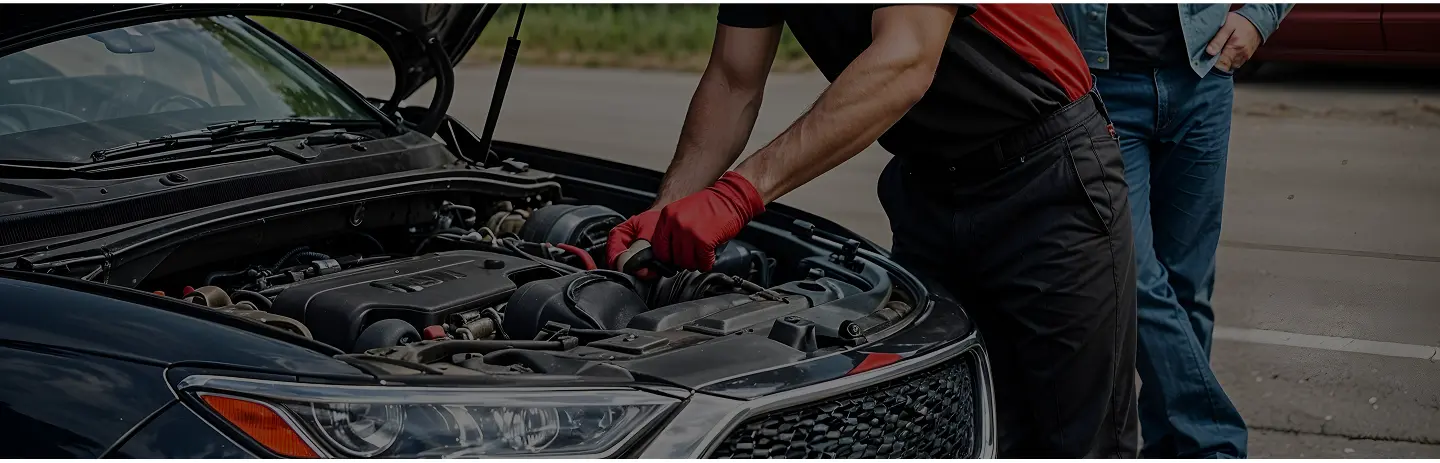
You pop the hood for a routine check and notice something strange.
The coolant reservoir is completely empty.
Naturally, you assume the cooling system is dangerously low on coolant. But after the engine cools down, you carefully remove the radiator cap and discover the radiator itself is still completely full.
Now you’re confused.
How can the coolant reservoir be empty if the radiator still has coolant in it?
At first glance, it seems contradictory. But this is actually a very specific cooling-system symptom and in most cases, it points toward a problem with how coolant moves between the radiator and overflow reservoir during normal heat cycles.
At Instant Car Fix, our mobile mechanics diagnose cooling-system problems constantly. One customer recently called us because the coolant reservoir on her Toyota Camry kept going empty every few weeks, but the radiator always stayed full. The issue turned out to be a failing radiator cap that could no longer pull coolant back from the reservoir during cooldown.
Another customer with a Ford Escape noticed coolant smell near the front of the vehicle but never saw puddles underneath. Inspection revealed a tiny crack in the overflow reservoir that only leaked once the system became hot and pressurized.
The good news is:
The most common causes include:
♦ bad radiator caps
♦ overflow hose problems
♦ cracked coolant reservoirs
♦ trapped air pockets
♦ pressure leaks
♦ improper coolant service
This guide explains:
♦ how the radiator and reservoir work together
♦ why the reservoir can go empty while the radiator stays full
♦ what symptoms to watch for
♦ how to diagnose the issue properly
♦ and when the problem becomes serious
If you're searching for a mechanic near me because your coolant reservoir keeps running dry, this article will help you understand what’s happening before overheating or engine damage occurs.
Modern vehicles use a sealed, pressurized cooling system designed to regulate engine temperature automatically.
As coolant heats up, it expands. That expanding coolant creates pressure inside the system. Once pressure exceeds the radiator cap’s rating, excess coolant flows into the overflow reservoir through a small hose connected near the radiator cap.
After the engine cools down, coolant contracts and creates vacuum pressure inside the radiator. The radiator cap then opens a second internal valve that pulls coolant back from the reservoir into the radiator.
This push-and-pull cycle happens continuously:
♦ coolant expands into the reservoir while hot
♦ coolant returns to the radiator while cooling
On a healthy system:
♦ the radiator stays full
♦ the reservoir level rises and falls slightly
♦ coolant moves back and forth normally
When the reservoir stays empty:
that return cycle has failed somewhere.
Read:
Why is my car overheating but coolant is full
And:
Car Overheating: Causes, Symptoms & Exactly What To Do
The radiator cap is by far the most common cause of this problem.
Most drivers think the radiator cap is simply a lid. It’s actually a pressure-regulating valve with two separate functions:
♦ releasing pressure into the reservoir
♦ pulling coolant back into the radiator
If the vacuum return valve inside the cap fails:
coolant gets pushed into the reservoir but never returns.
Over time, the system behavior becomes abnormal.
One customer’s Honda Accord kept showing an empty coolant reservoir every few days despite no visible leaks. The radiator itself remained completely full. The culprit turned out to be a weak radiator cap whose return valve had failed internally.
A bad radiator cap may also cause:
♦ random overheating
♦ coolant smell
♦ bubbling reservoir
♦ temperature fluctuations
♦ coolant overflow
The good news:
radiator caps are inexpensive.
Most cost between:
$10-$25.
Read:
Why your car smells like coolant but is not overheating
The overflow hose connects the radiator to the coolant reservoir.
If this hose becomes:
♦ cracked
♦ disconnected
♦ kinked
♦ blocked internally
coolant can no longer move properly between the two components.
This creates exactly the symptom many drivers see:
empty reservoir with full radiator.
One customer’s Nissan Altima had a tiny split near the radiator neck connection. Every time the engine heated up, coolant escaped through the crack before ever reaching the reservoir. Because the leak only occurred under pressure, it was nearly invisible while the engine was cold.
Overflow hoses become brittle over time from:
♦ engine heat
♦ age
♦ coolant exposure
♦ vibration
Fortunately, hose replacement is usually inexpensive and straightforward.
Coolant reservoirs are commonly made from translucent plastic that weakens over years of heat cycles.
Small hairline cracks can develop and slowly leak coolant whenever the system becomes pressurized.
This often creates confusing symptoms because:
♦ the radiator still appears full
♦ the reservoir repeatedly empties
♦ coolant disappears slowly
♦ no major puddles appear underneath
One customer’s Chevrolet Malibu only lost coolant during longer highway drives. After pressure testing the system, we discovered a tiny crack near the bottom seam of the reservoir tank that only opened once the plastic expanded from heat.
Signs of reservoir damage include:
♦ white crusty residue
♦ coolant smell
♦ wet spots near reservoir
♦ coolant staining
♦ visible cracks
Read:
Why your car smells like burning rubber
Air pockets inside the cooling system can disrupt coolant circulation and interfere with reservoir behavior.
This commonly happens after:
♦ hose replacement
♦ overheating events
Air behaves very differently from liquid coolant.
Instead of circulating smoothly, trapped air compresses and expands unpredictably. This can prevent the radiator from pulling coolant back from the reservoir during cooldown.
One customer replaced his thermostat himself and later noticed the coolant reservoir constantly sitting empty. The issue wasn’t the thermostat at all the cooling system simply had trapped air because it had not been bled correctly afterward.
Air pockets often cause:
♦ fluctuating temperature gauge
♦ heater blowing cold air
♦ gurgling sounds
♦ intermittent overheating
♦ bubbling coolant
Read:
Why your car dies when hot but restarts later
The cooling system must remain fully sealed to function correctly.
If pressure escapes through:
♦ loose hose clamps
♦ water pump seals
♦ radiator leaks
♦ gasket leaks
♦ heater core leaks
the system may lose the vacuum needed to pull coolant back from the reservoir.
This creates a situation where:
♦ coolant exits normally
♦ but return flow becomes weak or nonexistent
One customer’s Jeep Grand Cherokee repeatedly showed low reservoir levels despite no visible coolant puddles. Pressure testing eventually revealed a tiny seep near the water pump gasket that only leaked while the engine cooled down.
Read:
Faulty water pump diagnosis
Sometimes the problem is surprisingly simple.
After a coolant flush or repair, the radiator may have been filled correctly while the reservoir was accidentally left empty.
The cooling system may initially appear normal because the radiator itself still contains enough coolant to regulate temperature properly.
But eventually:
♦ the reservoir never participates in the expansion cycle
♦ air enters the system
♦ coolant circulation becomes inconsistent
One customer called us with a Hyundai Sonata after a DIY coolant flush because the overflow reservoir stayed empty permanently afterward. The reservoir simply had never been refilled during the service.
Always verify:
♦ radiator is full
♦ reservoir is filled to MAX line
♦ system is properly bled
after any cooling-system repair.
The filler neck where the radiator cap seals can also become damaged over time.
Corrosion, warping, or cracks around the sealing surface prevent the cap from sealing correctly.
Even a brand-new radiator cap may fail if:
the filler neck itself is damaged.
This creates:
♦ pressure loss
♦ poor vacuum return
♦ coolant circulation problems
♦ recurring empty reservoir symptoms
Older vehicles are especially vulnerable to filler neck corrosion if coolant maintenance has been neglected.
This happens more often than most people realize.
Not all radiator caps are interchangeable.
Using the wrong:
♦ pressure rating
♦ cap design
♦ cap depth
♦ cap size
can completely disrupt cooling-system behavior.
Some vehicles also use:
pressurized overflow reservoirs
instead of traditional radiator-mounted pressure caps.
Installing the wrong style cap can create major coolant circulation problems.
Always match:
OEM pressure rating and cap type.
In many cases, an empty reservoir with a full radiator is caused by relatively minor mechanical issues.
But certain symptoms suggest more serious problems.
Seek immediate diagnosis if you notice:
♦ overheating
♦ white exhaust smoke
♦ milky oil
♦ bubbling coolant
♦ strong coolant smell
♦ repeated coolant loss
♦ engine misfires
♦ steam from engine bay
These symptoms may indicate:
♦ blown head gasket
♦ cracked cylinder head
♦ internal coolant leak
♦ severe cooling-system failure
One Subaru owner ignored an empty reservoir for months because the radiator still looked full. Eventually the vehicle began overheating and producing white smoke. Combustion testing confirmed a failing head gasket allowing exhaust gases into the cooling system.
Read:
Why your engine misfires under acceleration
And:
Car overheating - Causes, symptoms and exactly what to do
If your coolant reservoir keeps going empty, follow these steps:
Always check the radiator only when the engine is completely cold.
Look for cracks, disconnections, or kinks.
Check for:
♦ hairline cracks
♦ coolant stains
♦ white residue
♦ damaged fittings
This is often the fastest and cheapest fix.
Pressure testing helps identify hidden leaks.
Air pockets often create inconsistent reservoir behavior.
Refill the reservoir and monitor it through several drive cycles.
At Instant Car Fix, our mobile mechanics diagnose cooling-system issues directly at:
♦ homes
♦ offices
♦ apartment complexes
♦ parking garages
♦ roadside locations
We perform:
♦ pressure testing
♦ coolant leak inspections
♦ radiator cap testing
♦ thermostat diagnosis
♦ overheating diagnosis
♦ water pump inspections
♦ cooling-system bleeding
without requiring a tow truck or repair shop visit.
If you're searching for a mechanic near me because your coolant reservoir keeps running dry, we can help identify the problem before overheating damages the engine.
Many cooling-system issues are preventable with basic maintenance.
Helpful preventative maintenance includes:
♦ replacing radiator caps every few years
♦ flushing coolant on schedule
♦ inspecting hoses regularly
♦ checking coolant levels monthly
♦ replacing cracked reservoirs early
♦ addressing overheating immediately
Most cooling-system failures give warning signs before major breakdown occurs.
Ignoring them usually turns a small repair into a much larger problem later.


This usually means coolant is not moving correctly between the radiator and overflow reservoir. The most common causes are a bad radiator cap, overflow hose problems, trapped air, or a cracked reservoir.
Yes. The radiator cap controls both pressure release and vacuum return inside the cooling system. If the return valve fails, coolant may leave the radiator but never return properly from the reservoir.
Not for long. Even if the radiator is currently full, the cooling system is no longer regulating coolant correctly and overheating can eventually occur.
Yes. Air pockets disrupt coolant circulation and interfere with the pressure changes required to move coolant between the radiator and reservoir.
Recurring coolant loss usually indicates a leak, bad radiator cap, pressure issue, cracked reservoir, or cooling-system malfunction. Proper pressure testing is often required to identify the exact cause.
Absolutely. A cracked reservoir allows coolant to escape during heat expansion cycles, eventually reducing overall coolant volume enough to trigger overheating.
Some coolant leaks only occur while the system is hot and pressurized. Small cracks, hose leaks, radiator-cap failures, or internal engine leaks may not leave obvious puddles.
On systems with removable radiator caps, the radiator itself should be completely full while the reservoir should sit between the MIN and MAX lines when cold.
Yes. Mobile mechanics can pressure test the cooling system, inspect hoses, test radiator caps, diagnose overheating problems, and locate hidden coolant leaks directly at your location.
Ignoring the problem can eventually lead to air pockets, coolant loss, overheating, head gasket failure, or severe engine damage. Small cooling-system issues often become expensive repairs if left unresolved.
If your coolant reservoir keeps going empty while the radiator stays full, InstantCarFix mobile mechanics can diagnose the issue directly at your location. We perform cooling-system pressure testing, leak inspections, radiator cap diagnosis, and overheating diagnostics without requiring a tow truck.

Diego has great customer service. He was very fast and professional. He also gave me a few tips for any other problems


Great customer service! Real person answered every phone call right away and was able to assist quickly. I got the pre-purchase inspection I needed. Detailed notes, multiple photos. Very satisfied. A+

J e a n was very helpful to me I'm hoping my problem has been resolved very patient and very professional I recommend them to other people

Had Caleb do a pre-purchase inspection on a Jeep I was buying from Missouri, and the guy was great. Really thorough — found stuff I would’ve missed, told me straight what was worth fixing and what wasn’t. No runaround, answered all my questions fast. If you’re buying a used rig, don’t skip this step. I highly recommend.

Lovely service, very fast, the car was fully fixed, battery change was super fast and oil change. Very grateful!

Zack was very professional and did a great job fixing my car during the estimated time he provided. We would definitely use this service again.

Zach was great is work with. Showed up in the expected time frame, got the work done quickly as well.

Jamie arrived on time, diagnosed my car’s issue and provided a quote for the repair. I will definitely use again if needed.

My Jaguar battery was dead and I had no way of accessing it since it is located in the trunk….and I could not open the trunk since the battery was dead😵💫. Contacted Instant Car Fix and a mechanic was dispatched with a new battery. He was great! Got the trunk opened by jumping a terminal under the hood. Installed the new battery and the car was good to go! Great service by an experienced mechanic! Thanks!

Diego has great customer service. He was very fast and professional. He also gave me a few tips for any other problems
Great customer service! Real person answered every phone call right away and was able to assist quickly. I got the pre-purchase inspection I needed. Detailed notes, multiple photos. Very satisfied. A+
J e a n was very helpful to me I'm hoping my problem has been resolved very patient and very professional I recommend them to other people
Had Caleb do a pre-purchase inspection on a Jeep I was buying from Missouri, and the guy was great. Really thorough — found stuff I would’ve missed, told me straight what was worth fixing and what wasn’t. No runaround, answered all my questions fast. If you’re buying a used rig, don’t skip this step. I highly recommend.
Lovely service, very fast, the car was fully fixed, battery change was super fast and oil change. Very grateful!
Zack was very professional and did a great job fixing my car during the estimated time he provided. We would definitely use this service again.
Zach was great is work with. Showed up in the expected time frame, got the work done quickly as well.
Jamie arrived on time, diagnosed my car’s issue and provided a quote for the repair. I will definitely use again if needed.
My Jaguar battery was dead and I had no way of accessing it since it is located in the trunk….and I could not open the trunk since the battery was dead😵💫. Contacted Instant Car Fix and a mechanic was dispatched with a new battery. He was great! Got the trunk opened by jumping a terminal under the hood. Installed the new battery and the car was good to go! Great service by an experienced mechanic! Thanks!