Financing all Credit Types - 
Financing all Credit Types -
Financing all Credit Types -
Financing all Credit Types -
Several belt-drive problems can produce a similar startup noise. The good news: on most cars the squeal comes from the belt drive at the front of the engine. Arrange an inspection promptly. The sound alone cannot establish how close a component is to failure. Here is what usually causes it, what the noise pattern tells you, how a mechanic finds the source, and when the squeal means stop driving.
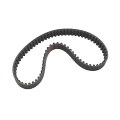
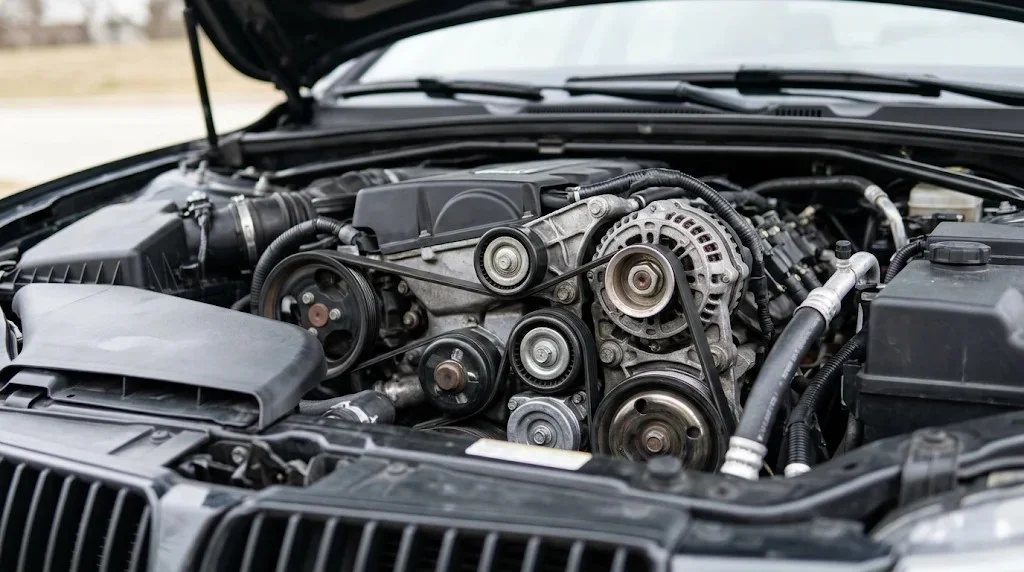
The serpentine belt runs off the crankshaft and powers accessories such as the alternator, the A/C compressor, and on many vehicles the power steering pump and water pump. At startup, three things work against the belt at once: the engine revs briefly higher, the rubber is cold and slightly stiff, and the alternator puts extra load on the belt while it recharges the battery after the start. Any weakness in the belt or its tension shows up in that moment as a squeal or chirp. The two sounds differ: a sustained squeal commonly involves belt slip, while a rhythmic chirp can involve misalignment, wear, bearings, or contamination.
That is why the noise often fades as the engine warms up: warm rubber grips better, and moisture on the belt evaporates. A squeal that disappears with warmth still deserves attention - it can involve wear, tension, alignment, or contamination, and warmth does not fix wear.
A worn or glazed serpentine belt is one possible source. The ribs crack, the surface hardens, and the belt slips on its pulleys instead of gripping them.
A weak belt tensioner is another. The tensioner is a spring-loaded arm that keeps the belt tight, and when its spring weakens, even a healthy-looking belt can slip, especially under the extra alternator load right after startup.
Dry or worn pulley bearings can chirp or squeal too. The tensioner pulley, the idler pulley, and the bearings inside accessories all spin at high speed, and a bearing that is drying out often announces itself with a high-pitched chirp.
The sound can also come from an accessory itself, such as a failing alternator or A/C compressor bearing. That is why a mechanic checks the whole belt drive rather than assuming the belt is at fault.
When the squeal happens matters as much as the sound itself:
Note when the noise happens before your appointment; these patterns are clues, not confirmation of a worn belt or tensioner.
With the engine off and cool, you can look at the serpentine belt itself. Cracks across the ribs, frayed edges, missing chunks of rib, or a shiny, glazed surface are all visible wear. A belt can be worn without obvious cracks; modern EPDM belts may lose rib material.
Look, but do not touch anything with the engine running, and do not spray belt dressings or household lubricants at a squealing belt. These products can mask the noise, make the slip worse, and contaminate a new belt later. The noise is information - the goal is to find the worn part, not quiet the symptom.
The inspection starts with the belt: cracks, fraying, glazing, and rib wear are visible on the pulleys or with the belt removed. The mechanic then checks the tensioner's spring force and watches the belt with the engine running - flutter in the belt or a bouncing tensioner arm points to tension problems. With the belt off, each pulley is spun by hand to feel for rough or loose bearings, and the pulleys are checked for alignment, since a misaligned pulley makes even a new belt noisy.
If the squeal only happens with the A/C on, or only while turning, that pattern narrows the list further. The goal is to name the failed part before anything is replaced, because a new belt installed on a weak tensioner or a rough pulley can start squealing again.
A squeal that only appears at startup and fades still deserves a prompt inspection.
Stop driving and arrange assistance instead if the squeal becomes constant or much louder, or if it comes with any of these: a battery warning light (the belt may no longer be driving the alternator), steering that suddenly feels heavy (on vehicles with belt-driven power steering, the power steering pump may have lost its drive), or a rising temperature gauge (on engines where the belt drives the water pump, coolant circulation may have stopped). Any of these can mean the belt is slipping badly or has already come off.
A clear answer to the first question matters most: a shop that can name the failed part is less likely to sell you a belt that starts squealing again.


Only if the belt is the worn part. If the real problem is the tensioner or a pulley bearing, a fresh belt alone usually gets noisy again. The fix that lasts is the one aimed at the failed part.
Usually you cannot tell by ear alone - a worn belt, a weak tensioner, and a dry pulley bearing can sound nearly identical. The useful clue is the pattern: when it happens and under what load. A mechanic confirms the rest with a belt-off inspection before any parts are replaced.
Both add load to the belt. If the belt or tensioner is marginal, the extra load makes it slip and squeal. On vehicles with a belt-driven power steering pump, a squeal while turning at low speed is a classic sign of belt slip.
Usually not. A startup squeal can come from the external belt drive, but the source needs confirmation. It still deserves a prompt inspection, because a failed belt can affect charging, steering assist, and on some engines cooling.
Book an Instant Car Fix mechanic to come to you. We service most areas nationwide.

Used this site first time and got good results,mechanic came on time ,did all testing and diagnostic,found out our battery not working right.We happy with service.


Needed a subframe cradle replaced for a 2014 Dodge Charger 5.7. Left the mechanic this morning. I had to go to work. Got back from work. Checked on my vehicle turned it on, and no more engine vibration inside my cabin. Job well done. Thank you.

Although there was some confusion about our appointment window. I found customer service to be extremely helpful. My only suggestion would be that there is the opportunity to chat with the actual mechanic. I was arranging service for my father, who’s out of town and had some memory issues, so it would’ve made it much easier to coordinate and understand if I could chat with the mechanic.

My mobile mechanic Donny was fantastic. He arrived promptly, diagnosed the issue right away, and replaced my battery quickly and efficiently. He’s extremely knowledgeable and clearly an expert in his field. I really appreciated his professionalism and the smooth experience from start to finish. I would gladly use his services again and highly recommend him to anyone needing reliable mobile auto repair.

Mr. Jimmy is great and very good with his work. I would recommend him again to do the work. Thank you!

Jelson monterrosa and Adrian gee Did a fantastic job work , quick and efficient , and i'm very happy with the work they did to my vehicle definitely would call them again They were absolutely the best

Somewhat hesitant as it was a website I had never used before, but the mechanic came out. Performed the service, quick and efficient and good to go.

Dustin did a fantastic job getting my broken bolt out fast and efficiently. I can now continue my project. Thank you!

Sergio fixed the car really fast and it drives and sounds much better than before. I would recommend having him fix any car again

Used this site first time and got good results,mechanic came on time ,did all testing and diagnostic,found out our battery not working right.We happy with service.
Needed a subframe cradle replaced for a 2014 Dodge Charger 5.7. Left the mechanic this morning. I had to go to work. Got back from work. Checked on my vehicle turned it on, and no more engine vibration inside my cabin. Job well done. Thank you.
Although there was some confusion about our appointment window. I found customer service to be extremely helpful. My only suggestion would be that there is the opportunity to chat with the actual mechanic. I was arranging service for my father, who’s out of town and had some memory issues, so it would’ve made it much easier to coordinate and understand if I could chat with the mechanic.
My mobile mechanic Donny was fantastic. He arrived promptly, diagnosed the issue right away, and replaced my battery quickly and efficiently. He’s extremely knowledgeable and clearly an expert in his field. I really appreciated his professionalism and the smooth experience from start to finish. I would gladly use his services again and highly recommend him to anyone needing reliable mobile auto repair.
Mr. Jimmy is great and very good with his work. I would recommend him again to do the work. Thank you!
Jelson monterrosa and Adrian gee Did a fantastic job work , quick and efficient , and i'm very happy with the work they did to my vehicle definitely would call them again They were absolutely the best
Somewhat hesitant as it was a website I had never used before, but the mechanic came out. Performed the service, quick and efficient and good to go.
Dustin did a fantastic job getting my broken bolt out fast and efficiently. I can now continue my project. Thank you!
Sergio fixed the car really fast and it drives and sounds much better than before. I would recommend having him fix any car again