Financing all Credit Types - 
Financing all Credit Types -
Financing all Credit Types -
Financing all Credit Types -
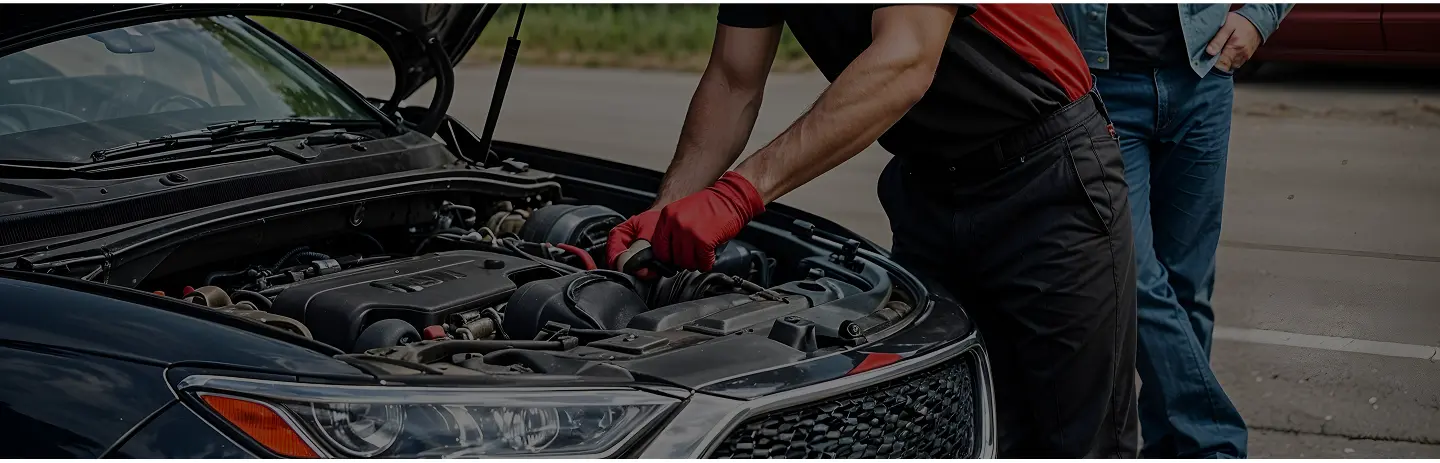
You merge onto the highway and suddenly the car feels weak. The engine hesitates when you press the gas, acceleration feels sluggish, and the vehicle struggles to maintain speed. Maybe it starts fine in the morning but acts completely different after driving for awhile. Maybe it cranks longer every week before finally starting. Maybe it even stalled once at a traffic light and restarted a few minutes later like nothing happened.
At first, the symptoms feel random.
Then they slowly get worse.
Fuel system problems often start this way, and two of the most commonly confused causes are a failing fuel pump and a clogged fuel filter.
The challenge is that these two problems can feel nearly identical from the driver’s seat. Both can create hesitation, loss of power, hard starting, rough acceleration, stalling, or even complete no-start conditions. That overlap is exactly why many people replace the wrong part first.
The difference matters because the repair costs can be dramatically different. A fuel filter replacement may be relatively inexpensive. A fuel pump replacement can become a much larger repair depending on the vehicle design and whether the fuel tank has to be removed.
The good news is that these failures usually behave differently once you understand how the fuel system actually works and how these components fail in the real world.
If your vehicle has been hesitating, stalling, struggling to accelerate, or randomly refusing to start, this guide will help you understand the difference between a bad fuel pump and a clogged fuel filter and how mechanics actually diagnose the problem properly.
A clogged fuel filter usually creates gradual fuel restriction. Symptoms often develop slowly and become most noticeable during acceleration, hill climbing, towing, or highway driving when the engine needs more fuel flow.
A failing fuel pump is more likely to create sudden no-start conditions, hot restart issues, intermittent stalling, loss of fuel pressure, or complete fuel delivery failure.
The best way to tell the difference is by looking at:
♦ how the symptoms developed,
♦ when they occur,
♦ whether fuel pressure is dropping,
♦ and how the vehicle behaves under load.
Your vehicle’s fuel system is essentially a controlled delivery system.
Fuel sits inside the tank. The fuel pump pushes it through the fuel lines. The fuel filter removes contamination before fuel reaches the injectors. The injectors then spray precise amounts of fuel into the engine for combustion.
The entire system depends on maintaining the correct:
♦ fuel pressure,
♦ fuel volume,
♦ and delivery consistency.
The fuel pump is responsible for creating pressure and maintaining flow. On most modern vehicles, the pump is electric and mounted inside the fuel tank. When you turn the key into the “on” position, the pump briefly primes the system before startup.
The fuel filter protects the system from contamination like dirt, rust, debris, and sediment. Over time, that contamination builds inside the filter media and gradually restricts fuel flow.
When either component begins failing, the engine stops receiving the fuel it needs consistently.
That is when drivability problems begin.
The reason these failures get confused so often is because both create:
fuel starvation.
In simple terms, the engine is not receiving the amount of fuel it needs at the correct pressure.
A clogged fuel filter physically restricts fuel flow.
A weak fuel pump struggles to maintain pressure and volume.
The result can feel almost identical:
♦ hesitation,
♦ stumbling,
♦ sluggish acceleration,
♦ rough running,
♦ misfires,
♦ stalling,
♦ or hard starting.
This is why replacing parts based only on symptoms becomes expensive quickly.
The important part is understanding:
♦ how the symptoms developed,
♦ when they appear,
♦ and what conditions make them worse.
♦ gradual loss of power
♦ hesitation during acceleration
♦ worse under heavy load
♦ sluggish highway performance
♦ symptoms worsen slowly over time
♦ vehicle still starts relatively normally
More Likely Fuel Pump
♦ sudden stalling
♦ crank-no-start condition
♦ hot restart failure
♦ loud whining from fuel tank
♦ intermittent no-start problems
♦ long crank before starting
♦ loss of fuel pressure
This is not definitive diagnosis, but it is usually a very useful starting point.
A clogged fuel filter normally creates gradual restriction.
That gradual progression is one of the biggest clues mechanics look for.
At first, the vehicle may only feel slightly weaker during acceleration. Many drivers barely notice it initially. Then highway merging becomes harder. Hill climbing feels sluggish. Passing power drops. The engine may hesitate when throttle demand suddenly increases.
The reason is simple: under heavier load, the engine demands more fuel volume.
A partially clogged filter may still allow enough fuel for:
♦ idle,
♦ low-speed driving,
♦ and light cruising.
But once fuel demand increases, the restriction becomes more obvious.
This is why clogged filters often create:
♦ hesitation during acceleration,
♦ stumbling under load,
♦ and weak highway performance.
Some vehicles may also trigger lean-condition trouble codes like:
However, lean codes alone do not automatically mean the filter is clogged because vacuum leaks, MAF sensor problems, and other issues can create similar conditions.
One major clue is time.
Fuel filters usually clog slowly over months or years. Drivers often adapt gradually to the worsening performance without realizing how much power the vehicle has lost until the restriction becomes severe.
If your vehicle still uses a serviceable inline fuel filter and it has not been replaced in years, that becomes an important diagnostic clue by itself.
Fuel pumps often fail differently.
Instead of slow restriction, they frequently create inconsistent fuel delivery or sudden pressure loss.
One of the most common fuel pump symptoms is a crank-no-start condition.
The engine turns over normally, but there is not enough fuel pressure for combustion to begin.
Another classic symptom is intermittent stalling.
The vehicle may:
♦ stumble,
♦ lose power,
♦ sputter,
♦ or shut off completely while driving.
Sometimes it restarts after sitting briefly. Sometimes it does not restart at all.
This is especially common when the pump overheats internally.
Hot restart problems are another huge clue pointing toward the pump.
The vehicle starts normally cold, drives fine, then struggles badly after being shut off for several minutes while hot. Heat increases electrical resistance inside aging pump motors. As the pump heats up, it may temporarily stop operating efficiently until it cools again.
This pattern is extremely common with failing pumps.
Heat-related drivability problems can become even worse during summer weather:
Extreme heat battery problems
Many failing fuel pumps also become noisy. Drivers often describe:
♦ whining,
♦ buzzing,
♦ humming,
♦ or unusually loud electrical sounds coming from the fuel tank area.
Healthy pumps are normally fairly quiet.
A noisy pump does not always mean immediate failure, but it is a major warning sign.
When you turn the ignition key into the “on” position without starting the engine, most vehicles briefly activate the fuel pump to prime the fuel system.
You can often hear a faint humming sound from the rear of the vehicle for a few seconds.
If you hear absolutely nothing, several possibilities exist:
♦ failed pump,
♦ bad relay,
♦ blown fuse,
♦ wiring issue,
♦ or electrical supply problem.
Silence alone does not prove the pump itself is dead, but it is an important clue.
This is where many people become frustrated.
Both clogged fuel filters and weak fuel pumps can create:
♦ hesitation,
♦ reduced acceleration,
♦ rough idle,
♦ stumbling,
♦ stalling,
♦ long crank times,
♦ and poor fuel economy.
That overlap is why professional diagnosis focuses heavily on:
♦ symptom patterns,
♦ testing,
♦ and operating conditions.
Not just isolated symptoms.
Older vehicles often used external inline fuel filters mounted underneath the vehicle or inside the engine bay.
These filters were:
♦ inexpensive,
♦ easy to replace,
♦ and considered regular maintenance items.
Many modern vehicles are completely different.
The filter may now be integrated into the fuel pump assembly inside the fuel tank itself.
That means:
♦ the filter may not be serviceable separately,
♦ replacement may require pump-module replacement,
♦ and diagnosis becomes more important before replacing expensive parts.
Some manufacturers even label these systems as “lifetime” filters.
In reality, “lifetime” usually means:
not designed for routine maintenance,
not:
incapable of failure.
Fuel pressure testing is one of the most important ways to separate fuel pump problems from fuel restriction issues.
A pressure gauge connects to the fuel system and measures whether the system can maintain proper pressure consistently.
The exact pressure specification depends on the vehicle.
What matters most is:
♦ stability,
♦ consistency,
♦ and performance under load.
If pressure is low, the cause could include:
♦ weak pump,
♦ clogged filter,
♦ bad pressure regulator,
♦ electrical supply issue,
♦ or fuel restriction.
Pressure testing prevents guessing.
That matters because blindly replacing fuel pumps gets expensive very quickly.
If your vehicle struggles during acceleration or randomly loses power, this related guide may also help:
Signs of a bad fuel pump
This is where diagnosis becomes more advanced.
Some weak fuel pumps can still produce acceptable pressure at idle while failing badly during acceleration or highway driving.
The vehicle may:
♦ idle normally,
♦ rev in the driveway,
♦ yet stumble badly under load.
That happens because volume matters too.
The pump must maintain adequate fuel flow continuously under demand not just hit a pressure number briefly.
This is one reason intermittent fuel problems can frustrate both drivers and inexperienced technicians.
Modern vehicles may store fuel-related trouble codes when delivery problems appear.
One common code is:
P0087
which generally indicates low fuel rail pressure.
Lean-condition codes such as:
P0171
may also appear when the engine is not receiving enough fuel.
However, trouble codes are clues, not guaranteed diagnosis.
A weak fuel pump, clogged filter, vacuum leak, sensor problem, or electrical issue can sometimes create overlapping codes.
Mechanics often suspect the filter more strongly when:
♦ symptoms developed slowly,
♦ acceleration became weaker gradually,
♦ highway power feels restricted,
♦ the engine still starts fairly normally,
♦ and the filter has not been serviced in years.
Load-sensitive hesitation is especially common with clogged filters.
If the engine struggles most during:
♦ hard acceleration,
♦ hill climbing,
♦ towing,
♦ or high-speed driving,
fuel restriction becomes much more likely.
The fuel pump becomes more likely when:
♦ the vehicle stalls randomly,
♦ restart problems occur while hot,
♦ fuel pressure drops suddenly,
♦ the engine cranks but will not start,
♦ or the pump becomes noticeably loud.
Intermittent stalling while driving is especially important:
Car dies while driving
That symptom is much more commonly associated with failing pumps than clogged filters.
Long crank times before starting can also point toward weak fuel delivery:
Why your car hesitates to start
A vehicle that struggles to restart after refueling may also indicate a fuel-delivery or EVAP-related issue:
Car won't start after getting gas
One reason fuel system diagnosis becomes confusing is because fuel delivery issues can feel very similar to:
♦ weak batteries,
♦ bad starters,
♦ charging-system failures,
♦ or ignition problems.
For example:
Car won't start but battery is fine
and:
Car clicks but won't start
cover several non-fuel-related no-start conditions that often get mistaken for fuel problems.
Charging-system issues can also create strange intermittent drivability symptoms:
Signs of a bad alternator
Weak battery voltage can also affect fuel-system behavior during extreme temperatures:
Extreme heat battery problems
Fuel delivery symptoms overlap with many other failures.
Vehicles may be misdiagnosed with:
♦ fuel pump failure,
♦ clogged filters,
♦ injector problems,
♦ ignition failures,
♦ crankshaft sensor issues,
♦ bad relays,
♦ vacuum leaks,
♦ or electrical problems.
Sometimes the vehicle actually has multiple issues simultaneously.
This is exactly why experienced technicians focus heavily on:
♦ testing,
♦ symptom progression,
♦ and operating conditions.
Not assumptions.
Fuel filter replacement is usually much less expensive when the filter is serviceable separately.
Older external inline filters may require minimal labor and relatively inexpensive parts.
Fuel pump replacement is typically more expensive because the pump often lives inside the fuel tank.
Some vehicles require:
♦ tank removal,
♦ extensive labor,
♦ or replacement of the complete fuel pump module assembly.
The important thing is avoiding unnecessary repairs by confirming the actual cause first.
Yes.
A severely restricted filter forces the fuel pump to work harder to maintain adequate fuel pressure and flow.
Over time, that added stress can overheat the pump and shorten its lifespan significantly.
This is one reason preventative maintenance still matters on vehicles with serviceable filters.
If the vehicle is:
♦ stalling,
♦ losing power unexpectedly,
♦ hesitating badly during acceleration,
♦ or randomly refusing to start,
it should be diagnosed quickly.
Fuel starvation becomes especially dangerous during:
♦ highway merging,
♦ heavy traffic,
♦ intersections,
♦ or high-speed driving.
A weak fuel pump can also leave you stranded with little warning.
Professional diagnosis normally follows a process.
A technician may:
♦ verify fuel pressure,
♦ check fuel trim data,
♦ inspect electrical supply to the pump,
♦ test relay operation,
♦ confirm voltage delivery,
♦ and evaluate symptom patterns.
They may also check:
♦ crankshaft sensor signals,
♦ charging-system voltage,
♦ ignition performance,
♦ and injector operation.
This is important because many “fuel pump symptoms” are not actually caused by the fuel pump.
A few simple habits can help extend fuel system life.
Avoid driving constantly with extremely low fuel levels whenever possible. Fuel helps cool and lubricate the pump inside the tank.
Replacing serviceable filters on schedule also reduces strain on the pump.
Pay attention to:
♦ longer crank times,
♦ hesitation,
♦ whining noises,
♦ or reduced acceleration.
Catching symptoms early usually reduces repair costs dramatically.


Yes. Both problems can reduce fuel delivery and create similar symptoms like hesitation, stalling, weak acceleration, and hard starting. The difference usually becomes clearer when you look at how the symptoms developed and perform fuel pressure testing.
No. Some failing fuel pumps create drivability problems long before the computer detects a fault. You may experience long crank times, stalling, or power loss without any warning lights appearing initially.
Absolutely. Many fuel pumps fail gradually and become worse when hot. The vehicle may run normally one day and struggle badly the next before eventually failing completely.
A clogged fuel filter often causes gradual power loss, hesitation during acceleration, weak highway performance, and sluggish throttle response. Symptoms usually worsen slowly over time rather than appearing suddenly.
Loss of power during acceleration commonly happens when the engine cannot get enough fuel under load. A weak fuel pump, clogged fuel filter, failing injector, or ignition issue can all contribute to this type of symptom.
Yes. A failing fuel pump may suddenly lose pressure or stop supplying fuel consistently, causing the engine to sputter, lose power, or stall completely. Intermittent stalling is one of the strongest warning signs of pump failure.
Many failing fuel pumps produce loud whining, buzzing, or humming noises from the fuel tank area. Healthy fuel pumps are usually much quieter and often barely noticeable.
It can become risky because the vehicle may stall unexpectedly or lose power during acceleration. Fuel delivery problems should be diagnosed quickly before reliability or safety becomes a concern.
Yes. Fuel helps cool and lubricate the fuel pump inside the tank. Frequently driving with very low fuel levels can increase heat and stress on the pump over time.
Many fuel pumps last well beyond 100,000 miles, but lifespan varies depending on driving habits, fuel quality, and maintenance. Repeated overheating, contaminated fuel, and constantly running near empty can shorten pump life significantly.
A certified mobile mechanic can test fuel pressure, inspect the fuel system, diagnose hard starting or power loss, and determine whether the issue is the fuel pump, fuel filter, relay, or another fuel delivery component.

Lovely service, very fast, the car was fully fixed, battery change was super fast and oil change. Very grateful!


Had Caleb do a pre-purchase inspection on a Jeep I was buying from Missouri, and the guy was great. Really thorough — found stuff I would’ve missed, told me straight what was worth fixing and what wasn’t. No runaround, answered all my questions fast. If you’re buying a used rig, don’t skip this step. I highly recommend.

Zach was great is work with. Showed up in the expected time frame, got the work done quickly as well.

Diego has great customer service. He was very fast and professional. He also gave me a few tips for any other problems

My Jaguar battery was dead and I had no way of accessing it since it is located in the trunk….and I could not open the trunk since the battery was dead😵💫. Contacted Instant Car Fix and a mechanic was dispatched with a new battery. He was great! Got the trunk opened by jumping a terminal under the hood. Installed the new battery and the car was good to go! Great service by an experienced mechanic! Thanks!

J e a n was very helpful to me I'm hoping my problem has been resolved very patient and very professional I recommend them to other people

Jamie arrived on time, diagnosed my car’s issue and provided a quote for the repair. I will definitely use again if needed.

Zack was very professional and did a great job fixing my car during the estimated time he provided. We would definitely use this service again.

Great customer service! Real person answered every phone call right away and was able to assist quickly. I got the pre-purchase inspection I needed. Detailed notes, multiple photos. Very satisfied. A+

Lovely service, very fast, the car was fully fixed, battery change was super fast and oil change. Very grateful!
Had Caleb do a pre-purchase inspection on a Jeep I was buying from Missouri, and the guy was great. Really thorough — found stuff I would’ve missed, told me straight what was worth fixing and what wasn’t. No runaround, answered all my questions fast. If you’re buying a used rig, don’t skip this step. I highly recommend.
Zach was great is work with. Showed up in the expected time frame, got the work done quickly as well.
Diego has great customer service. He was very fast and professional. He also gave me a few tips for any other problems
My Jaguar battery was dead and I had no way of accessing it since it is located in the trunk….and I could not open the trunk since the battery was dead😵💫. Contacted Instant Car Fix and a mechanic was dispatched with a new battery. He was great! Got the trunk opened by jumping a terminal under the hood. Installed the new battery and the car was good to go! Great service by an experienced mechanic! Thanks!
J e a n was very helpful to me I'm hoping my problem has been resolved very patient and very professional I recommend them to other people
Jamie arrived on time, diagnosed my car’s issue and provided a quote for the repair. I will definitely use again if needed.
Zack was very professional and did a great job fixing my car during the estimated time he provided. We would definitely use this service again.
Great customer service! Real person answered every phone call right away and was able to assist quickly. I got the pre-purchase inspection I needed. Detailed notes, multiple photos. Very satisfied. A+