Financing all Credit Types - 
Financing all Credit Types -
Financing all Credit Types -
Financing all Credit Types -
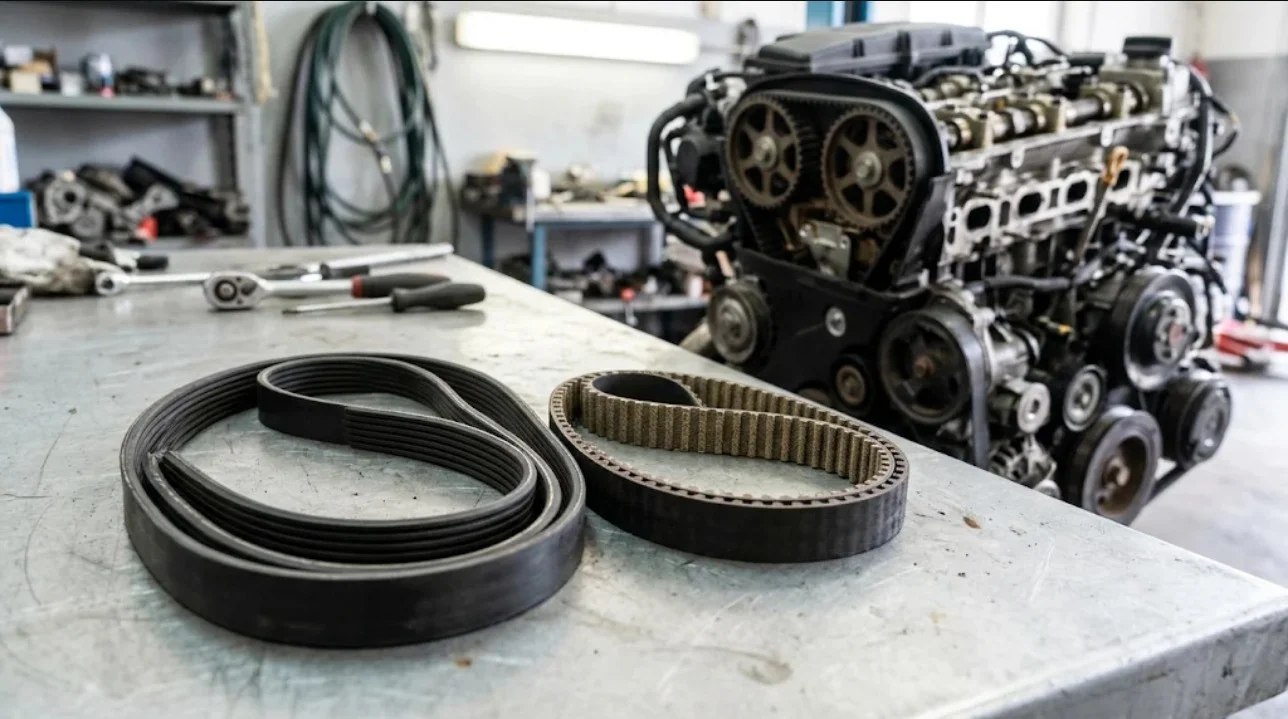
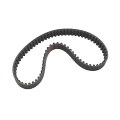
"Belt" is an overloaded word in car repair, and confusing the serpentine belt with the timing belt is easy - they are both rubber belts, they both live under the hood, and their names get used interchangeably by mistake. They do completely different jobs, wear on different schedules, and fail in very different ways. Knowing which is which helps you understand what your mechanic is telling you. Either failure can leave you stranded, and a broken timing belt can also cause major internal engine damage.
The serpentine belt - also called the drive belt or accessory belt - runs on the outside of the engine, wrapped around pulleys. Depending on the vehicle, it may drive the alternator, A/C compressor, hydraulic power-steering pump, and water pump. It is visible when you open the hood on many cars, held tight by a spring-loaded tensioner.
When it wears, it can show signs first: squealing, chirping, visible cracks, or frayed edges. If it fails, you lose whatever it drives - charging, steering assist, or cooling.
The timing belt lives inside the engine, behind covers, synchronizing the crankshaft and camshafts so the valves open and close at exactly the right moment in the combustion cycle. You cannot see it without disassembly, and it gives little or no warning before it fails - age and mileage are the enemies, not noise.
On interference engines (which many modern cars have), a snapped timing belt lets pistons hit open valves, and the repair escalates from a belt job to cylinder-head or engine work. That is why timing belts have strict replacement intervals set by the manufacturer, measured in miles and years, whether or not the belt looks worn.
That asymmetry is the practical point: a serpentine belt can show wear before it fails; a timing belt usually gives no such warning.
Serpentine belts often give audible or visible signs as they wear - squealing, constant noise, cracking - though the sound alone cannot establish how close a belt is to failure. Timing belts tend to fail silently and suddenly: the engine stops or will not start, and on interference engines the damage is done in that instant.
Some engines use a timing chain instead of a belt; chains are metal and last longer, and a worn chain or tensioner may rattle - but that is a third system with its own service rules. The practical takeaway: a squealing belt deserves a prompt inspection, while a timing belt is replaced on schedule, before it ever makes a sound. If a belt breaks while driving, pull over safely and arrange assistance; do not continue with overheating or suddenly heavy steering.
With the engine off and cool, the serpentine belt is often visible - look for cracks across the ribs, frayed edges, or a shiny glazed surface. Never touch it with the engine running. A belt can look intact and still be worn; a mechanic checks rib wear, alignment, tension, and the manufacturer's service schedule.
The timing belt is different: it sits behind covers and cannot be checked visually without disassembly. What you can check is your paperwork - the owner's manual or maintenance schedule lists the timing-belt interval for your engine, and your service records show whether it has been done. If you bought the car used and do not know, a mechanic can confirm the interval from your VIN.
A serpentine belt and its tensioner are inspected visually and by feel - the whole belt drive can be checked in one visit, and worn parts are replaced when they show wear. For the timing belt, inspection access varies by engine, and appearance alone cannot establish how much service life remains, which is why replacement follows the manufacturer's interval rather than the belt's appearance.
On many engines the water pump is driven by the timing belt, so replacing the two together while everything is apart is common practice - the mechanic goes over the options with you before deciding.


No. The serpentine belt runs on the outside of the engine and drives accessories like the alternator and A/C compressor. The timing belt sits inside the engine and keeps the crankshaft and camshafts synchronized. They are different parts with different jobs, replacement schedules, and failure symptoms.
A broken serpentine belt disables whatever it drives - charging, steering assist, and on some engines the water pump. A broken timing belt stops the engine immediately, and on interference engines it can bend valves and cause major internal damage. Both matter; the timing belt fails with less warning, which is why it is replaced on a schedule.
No. They are separate parts in separate locations, and replacing one says nothing about the other. If there is any doubt, check the invoice for the exact part name and your owner's manual for the timing-belt interval.
Many manufacturers list an inspection or replacement interval, but serpentine belts are mostly replaced on condition. A belt can look intact and still be worn; a mechanic checks rib wear, alignment, tension, and the manufacturer's service schedule during routine service.
The serpentine belt, often yes - on many cars you can see it with the hood open, and cracks or fraying are visible. Never touch it with the engine running. The timing belt sits behind covers; inspection access varies by engine, and appearance alone cannot establish how much service life remains, which is why its replacement follows the schedule.
Book an Instant Car Fix mechanic to come to you. We service most areas nationwide.

Needed a subframe cradle replaced for a 2014 Dodge Charger 5.7. Left the mechanic this morning. I had to go to work. Got back from work. Checked on my vehicle turned it on, and no more engine vibration inside my cabin. Job well done. Thank you.


Although there was some confusion about our appointment window. I found customer service to be extremely helpful. My only suggestion would be that there is the opportunity to chat with the actual mechanic. I was arranging service for my father, who’s out of town and had some memory issues, so it would’ve made it much easier to coordinate and understand if I could chat with the mechanic.

My mobile mechanic Donny was fantastic. He arrived promptly, diagnosed the issue right away, and replaced my battery quickly and efficiently. He’s extremely knowledgeable and clearly an expert in his field. I really appreciated his professionalism and the smooth experience from start to finish. I would gladly use his services again and highly recommend him to anyone needing reliable mobile auto repair.

Sergio fixed the car really fast and it drives and sounds much better than before. I would recommend having him fix any car again

Jelson monterrosa and Adrian gee Did a fantastic job work , quick and efficient , and i'm very happy with the work they did to my vehicle definitely would call them again They were absolutely the best

Used this site first time and got good results,mechanic came on time ,did all testing and diagnostic,found out our battery not working right.We happy with service.

Dustin did a fantastic job getting my broken bolt out fast and efficiently. I can now continue my project. Thank you!

Mr. Jimmy is great and very good with his work. I would recommend him again to do the work. Thank you!

Somewhat hesitant as it was a website I had never used before, but the mechanic came out. Performed the service, quick and efficient and good to go.

Needed a subframe cradle replaced for a 2014 Dodge Charger 5.7. Left the mechanic this morning. I had to go to work. Got back from work. Checked on my vehicle turned it on, and no more engine vibration inside my cabin. Job well done. Thank you.
Although there was some confusion about our appointment window. I found customer service to be extremely helpful. My only suggestion would be that there is the opportunity to chat with the actual mechanic. I was arranging service for my father, who’s out of town and had some memory issues, so it would’ve made it much easier to coordinate and understand if I could chat with the mechanic.
My mobile mechanic Donny was fantastic. He arrived promptly, diagnosed the issue right away, and replaced my battery quickly and efficiently. He’s extremely knowledgeable and clearly an expert in his field. I really appreciated his professionalism and the smooth experience from start to finish. I would gladly use his services again and highly recommend him to anyone needing reliable mobile auto repair.
Sergio fixed the car really fast and it drives and sounds much better than before. I would recommend having him fix any car again
Jelson monterrosa and Adrian gee Did a fantastic job work , quick and efficient , and i'm very happy with the work they did to my vehicle definitely would call them again They were absolutely the best
Used this site first time and got good results,mechanic came on time ,did all testing and diagnostic,found out our battery not working right.We happy with service.
Dustin did a fantastic job getting my broken bolt out fast and efficiently. I can now continue my project. Thank you!
Mr. Jimmy is great and very good with his work. I would recommend him again to do the work. Thank you!
Somewhat hesitant as it was a website I had never used before, but the mechanic came out. Performed the service, quick and efficient and good to go.